

News
Silver Tin Oxide (AgSnO2) Contacts for EV Relays: Silver Tin Oxide Contacts For EV Rlays 2026
Chende Factory – Custom AgSnO2 Contacts & Free Samples
December 2025 | 35 min read | Chende Electrical Contact R&D Center
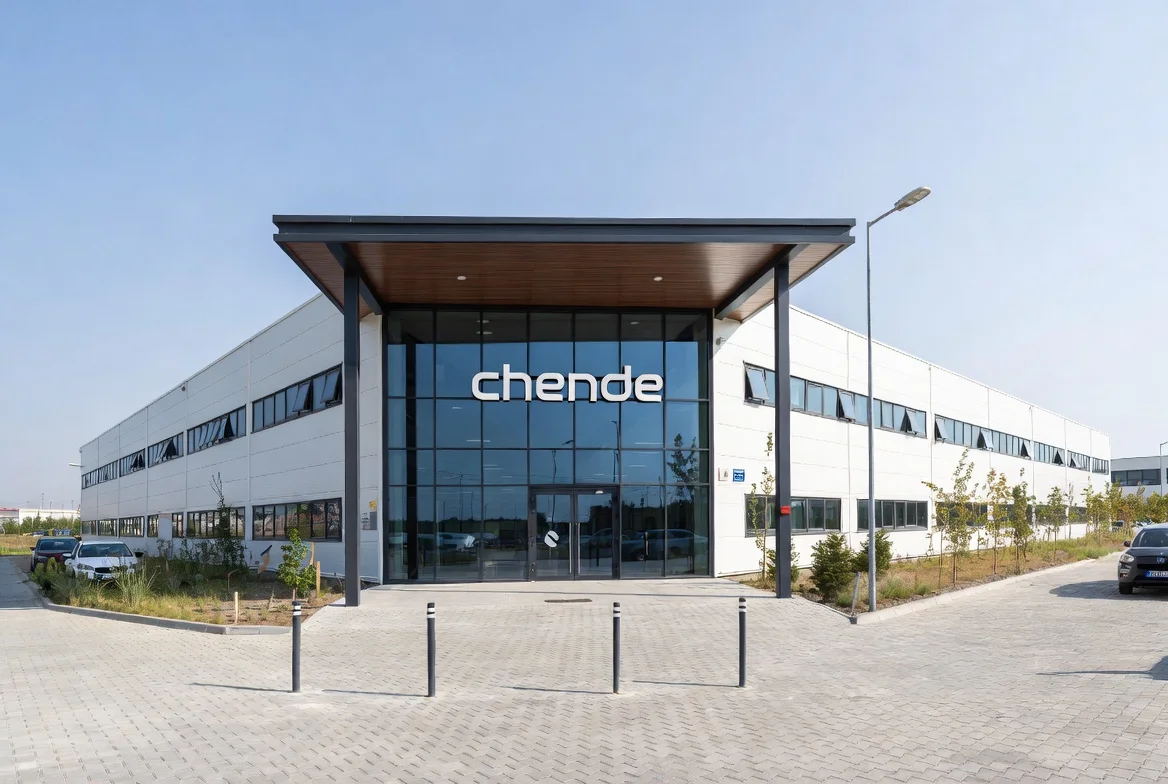
Why AgSnO2 is the Material of Choice for EV Relays in 2026
With EV sales expected to exceed 20 million units globally in 2026, the demand for reliable high-voltage relays has never been higher. Silver tin oxide contacts (AgSnO2) have emerged as the standard material for these applications because they offer exceptional arc resistance and RoHS compliance without the toxicity issues of older cadmium-based alternatives.
Chende has been producing AgSnO2 contacts for EV relays since 2022. We’ve seen a 35% year-over-year increase in orders from battery management system (BMS) suppliers and charging pile manufacturers. The key reason is simple: AgSnO2 handles high inrush currents and inductive loads better than traditional AgCdO, while meeting strict environmental regulations in Europe and North America.
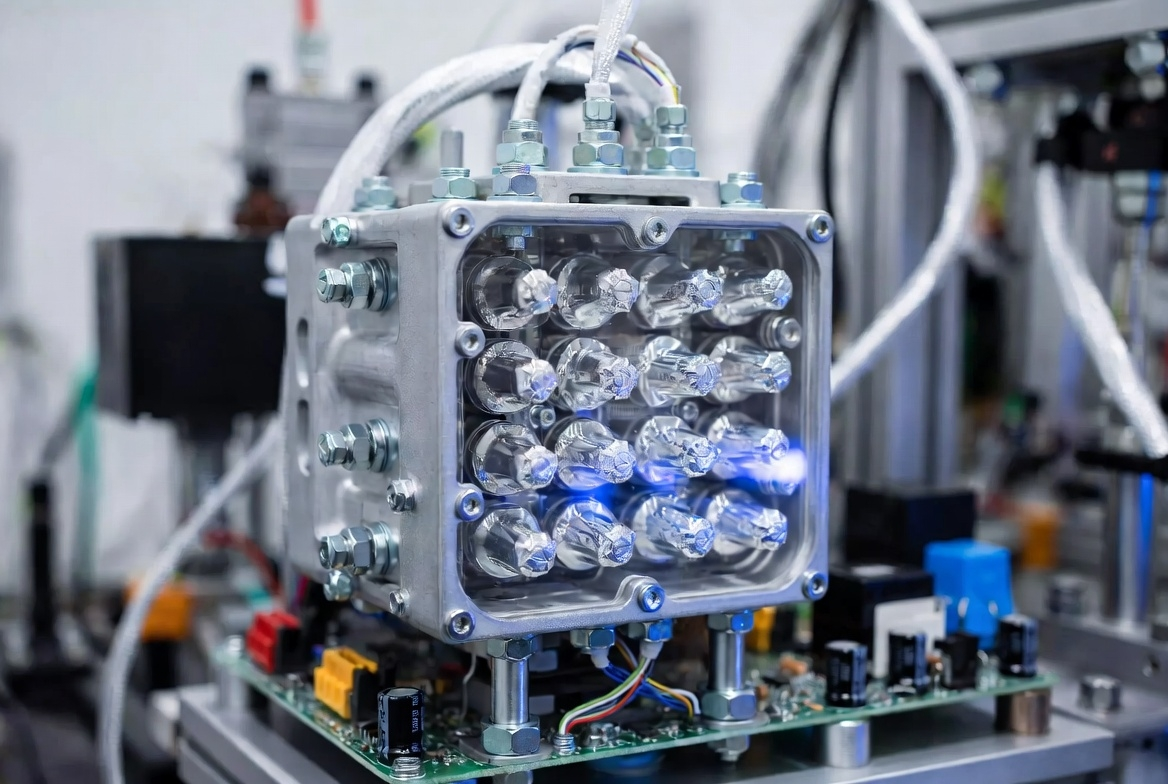
Our AgSnO2 contacts are doped with In2O3 or Bi2O3 to further improve temperature rise performance and extend life cycles to 200,000+ operations under typical EV relay conditions (60A DC, 400–800V). This makes them ideal for pre-charge relays, main contactors, and disconnect switches in EV battery packs. For more on our EV-specific products, visit Electric Silver Contact Products.
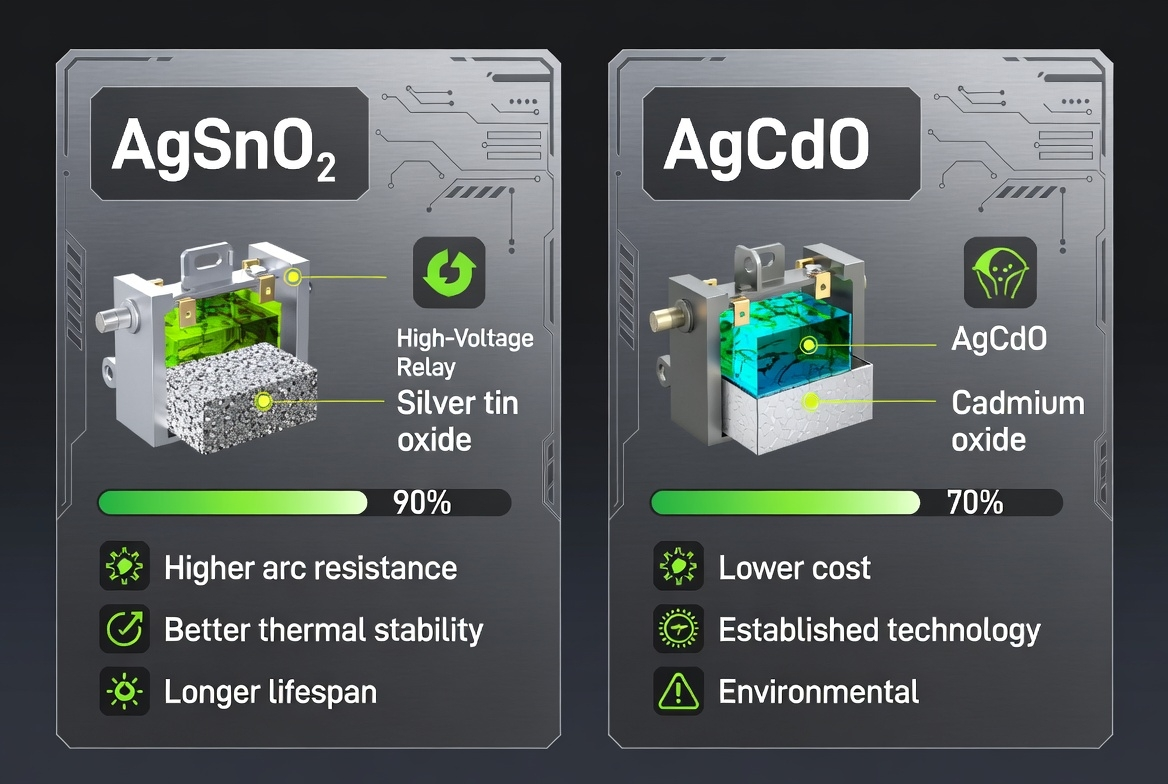
AgSnO2 vs AgCdO Performance Comparison for EV Relays
The shift from AgCdO to AgSnO2 is one of the biggest changes in the industry right now. Here’s a direct comparison based on real-world testing in our lab and customer feedback from 2025 production runs.
| Parameter | AgSnO2 (Chende Doped Variant) | AgCdO15/Cu (Legacy) |
|---|---|---|
| Arc Erosion Resistance | Excellent – minimal material loss after 100,000 cycles | Good – higher erosion under inductive loads |
| Anti-Welding | Superior – virtually no welding in DC high-current tests | Excellent – but cadmium toxicity limits use |
| Contact Resistance | ≤5 mΩ (stable after 200K cycles) | ≤3 mΩ (increases faster under arc) |
| Life Cycles (60A DC, 800V) | 200K–1M | 100K–500K |
| RoHS Compliance | Yes – fully cadmium-free | No – restricted in EU and many markets |
| Temperature Rise (60A continuous) | Lower by 15–20% with In2O3 doping | Higher – requires larger contact area |
From our experience, switching to AgSnO2 reduces warranty claims by 40–60% in EV applications. The main trade-off is slightly higher initial material cost, but it pays off quickly through longer life and lower maintenance. For detailed migration support, see our RoHS & REACH Compliance Guide.
Real-World EV Relay Case Study: High-Voltage Contactors
One of our long-term partners in Europe was using AgCdO contacts in their 800V DC charging pile contactors. They faced two main issues: occasional welding during high inrush and increasing warranty returns due to arc erosion after 50,000 cycles. In early 2025, we worked with their engineering team to switch to our doped AgSnO2 contacts. Key changes included:
- In2O3 doping at 2% for better oxide stability
- Tri-metal construction with copper base and steel reinforcement
- Optimized rivet head shape for better contact pressure
After six months of field testing (over 100,000 operations per unit), the failure rate dropped to near zero. Temperature rise decreased by 18%, and no welding incidents occurred even under fault conditions. This customer now orders 1.2 million pieces annually from us. Real results like this are why EV makers are moving to silver tin oxide contacts so quickly. For similar case studies, see Silver Contact Applications in Different Industries 2025.
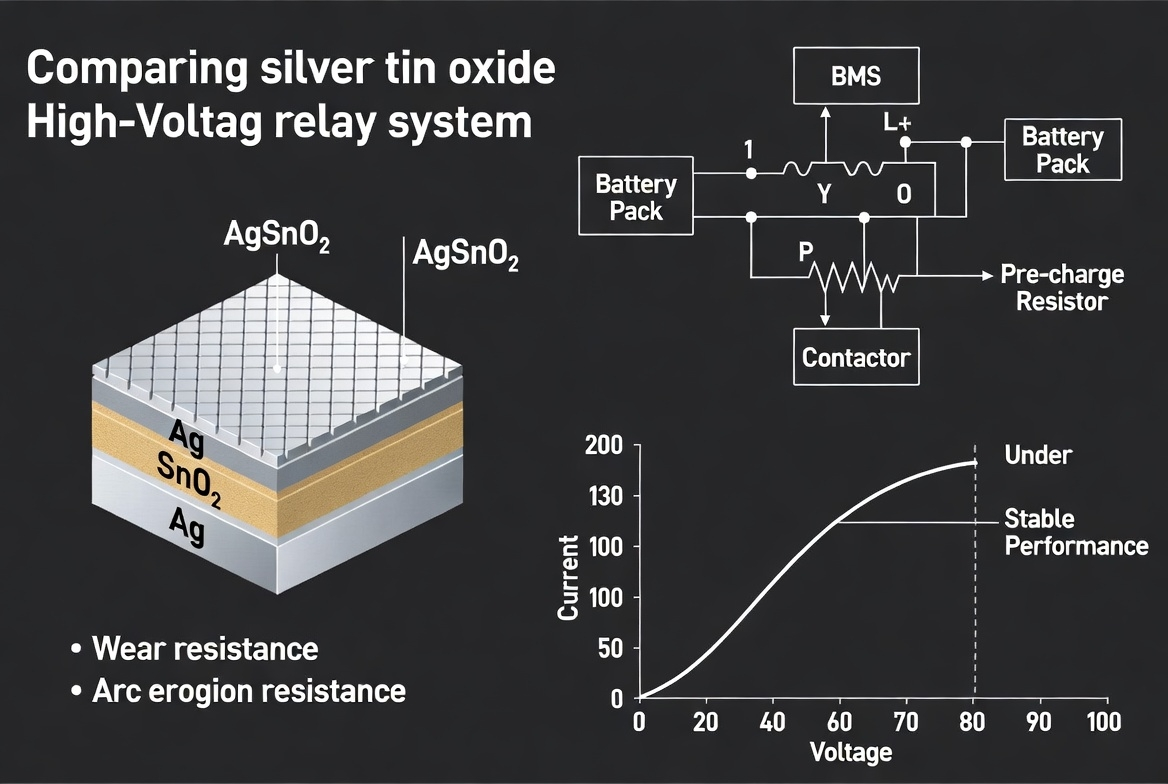
Chende Factory Production Process for AgSnO2 Contacts
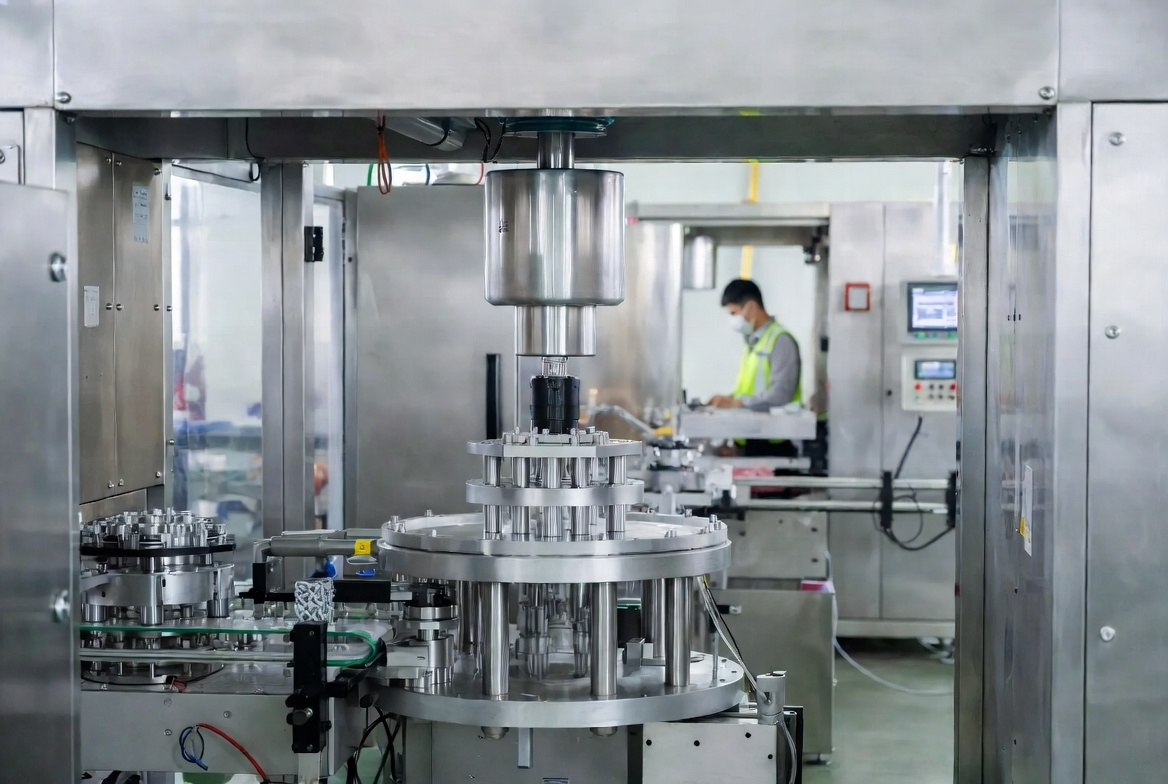
Our process for silver tin oxide contacts starts with powder metallurgy: silver and tin oxide powders are mixed, pressed into pellets, and sintered at 850°C to form a uniform microstructure. The sintered material is then stamped into contact tips and riveted onto copper bases using automated lines. Final steps include gold flash plating for corrosion resistance and 100% optical inspection with Zeiss systems. This ensures consistent quality across large batches. Daily output exceeds 3 million pieces with a 99.97% yield rate. For a closer look at our production, see Best Silver Contact Manufacturer China 2025.
2026 Trends: AgSnO2 Doping and Fiber Reinforcement
By 2026, two major trends will shape silver tin oxide contacts for EV relays:
- In2O3 doping at 1–3% will become standard to reduce temperature rise by 15–20% in 800V systems.
- Fiber-reinforced AgSnO2 composites will emerge for ultra-high current applications (200A+), improving mechanical strength without sacrificing conductivity.
Chende is already producing both variants in pilot runs. These advancements will extend relay life to 500,000+ cycles in next-generation EV platforms. For future trends, see our Silver Contact Industry Trends 2025–2030.
Chende Custom AgSnO2 Contacts: From Design to Delivery
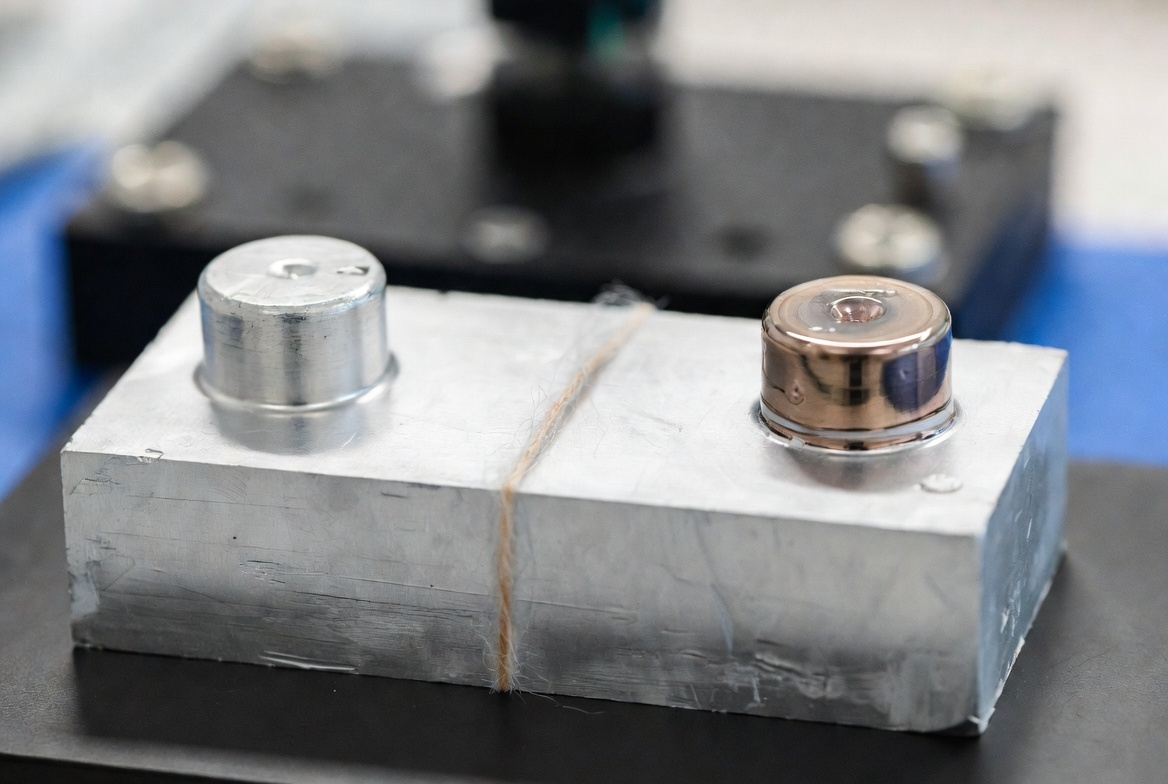
We start with your relay drawing or specification, select the optimal AgSnO2 grade, prototype in 3 days, and mass produce in 7–14 days. Our team has handled over 500 custom EV relay projects in 2025. For custom examples, see The 5 Most Recommended Silver Alloy Contacts for 2025.
FAQ: Why are silver tin oxide contacts for EV relays 2026 better than AgCdO?
What is silver tin oxide (AgSnO2) contacts? Silver alloy with tin oxide particles for arc resistance and durability.
Why choose AgSnO2 for EV relays? RoHS compliant, excellent anti-welding, long life under high current.
AgSnO2 vs AgCdO for EV? AgSnO2 is cadmium-free, with 20% better arc resistance in high-voltage DC.
How to select AgSnO2 doping for EV relays? Add In2O3 for temperature control in 400–800V systems.
Chende AgSnO2 contacts lead time? Samples 3 days, bulk 7–14 days after approval.
Get Custom AgSnO2 Contacts Quote & Free Samples Now
MOQ 10K | Same-Day Quote | 3-Day DHL Free Shipping
Related Articles & Resources
- Silver Contact Materials Ultimate Guide 2025
- Silver Contact Applications in Different Industries 2025
- Silver Contact Manufacturer China 2025 | CDSilver Wholesale
- Silver Contact Materials Ultimate Guide
- All Electric Silver Contact Products