

News
Silver Contact Materials Ultimate Guide 2025
AgNi vs AgSnO2 vs AgCdO15/Cu – Chende Factory Wholesale
Published December 08, 2025 | Reading Time: 65 minutes | Chende Electrical Contact R&D Center – 3.8 Billion Pieces Delivered
Why Silver Remains the Preferred Electrical Contact Material in 2025
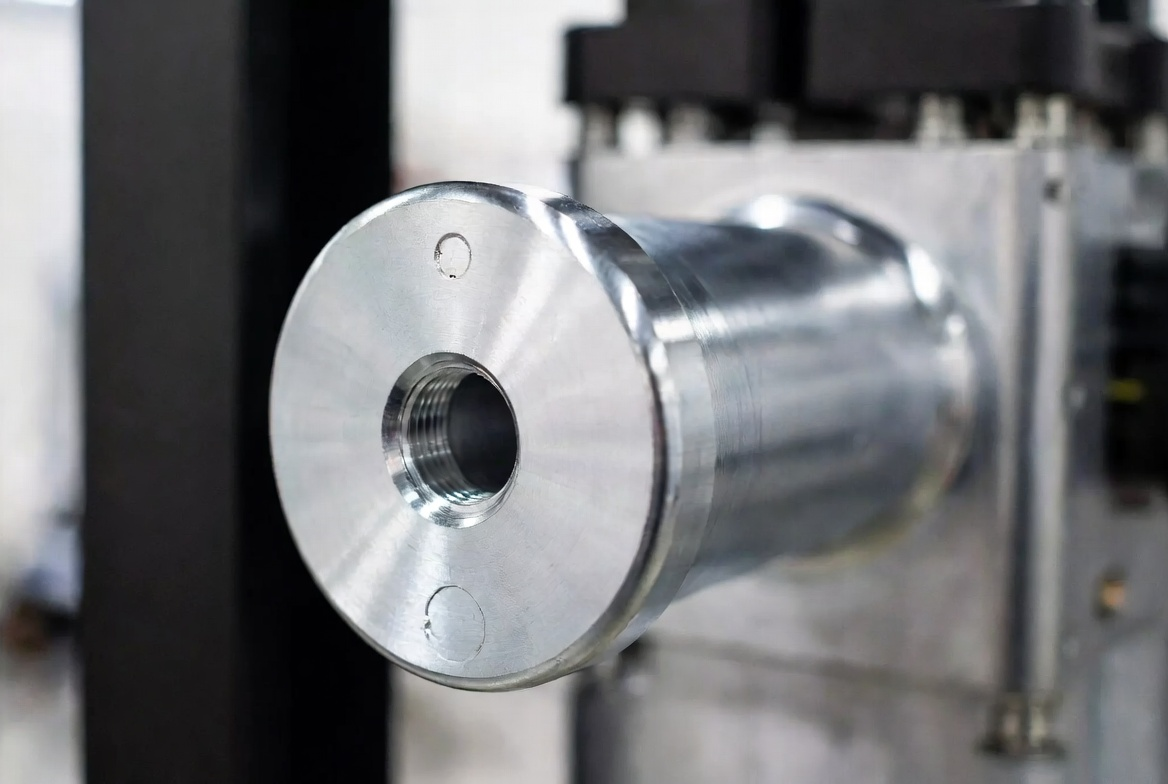
Silver possesses the highest electrical conductivity (63 × 10⁶ S/m) and thermal conductivity (429 W/m·K) among all metals, making it the material of choice for silver contact applications in relays, contactors, circuit breakers, and automotive switches. According to the World Silver Survey 2025, industrial demand for silver in electrical contacts reached 1,250 metric tons in 2024 and is projected to grow 18% in 2025, driven by the global transition to electric vehicles (EV), renewable energy systems, and smart grid infrastructure.
Chende Electrical Contact Co., Ltd., established in 2010, is an IATF 16949-certified silver contact manufacturer China with 15 years of specialization in bimetal silver contact, tri-metal silver contact, and silver contact rivet production. We have supplied over 3.8 billion pieces to more than 80 countries, serving Tier-1 brands in automotive, new energy, and industrial automation sectors. Our factory offers MOQ as low as 10,000 pieces, same-day quotation, and free DHL samples worldwide. All products are fully RoHS and REACH compliant.
For complete product specifications and instant quotation, visit our official product page: Electric Silver Contact Products.
Key Performance Requirements for Modern Silver Contacts
Modern silver alloy contact must satisfy multiple performance criteria under increasingly demanding conditions:
- Low and stable contact resistance (≤2 mΩ typical)
- High resistance to material transfer and welding
- Excellent arc erosion resistance under inductive loads
- Long mechanical and electrical life (>100,000 operations)
- Compliance with RoHS, REACH, and ELV directives
- Cost-effective material utilization through composite designs
Chende’s R&D laboratory conducts accelerated life testing according to IEC 60947-5-1 and UL 508 standards, ensuring every silver contact rivet meets or exceeds international requirements.
AgNi (Silver-Nickel) – The Cost-Performance Leader for General-Purpose Applications
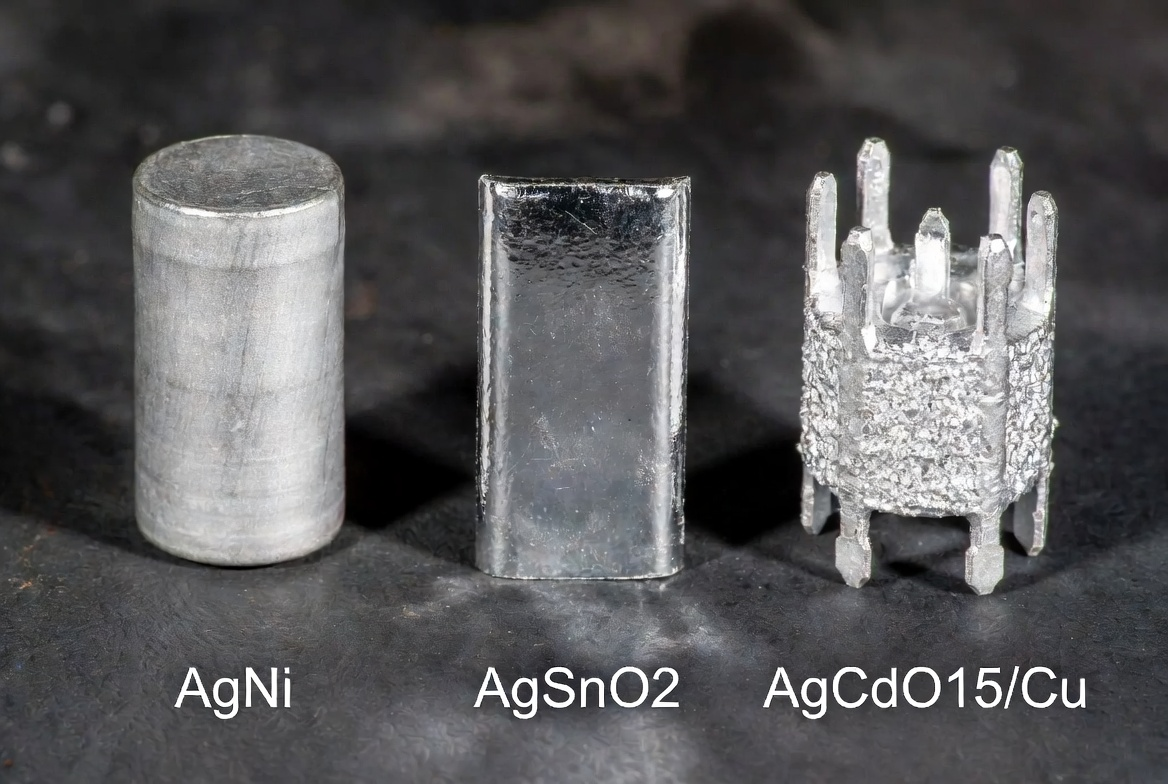
AgNi silver contact materials (typically 10–30% nickel) remain the most widely used in low-to-medium power applications due to their excellent combination of electrical conductivity, mechanical workability, and cost efficiency.
Key advantages of AgNi silver contact:
- Contact resistance: ≤2 mΩ (superior to most alternatives)
- Good resistance to material transfer under DC loads
- Excellent cold welding characteristics
- Easy processing for high-speed riveting production
- Lowest material cost among silver alloys
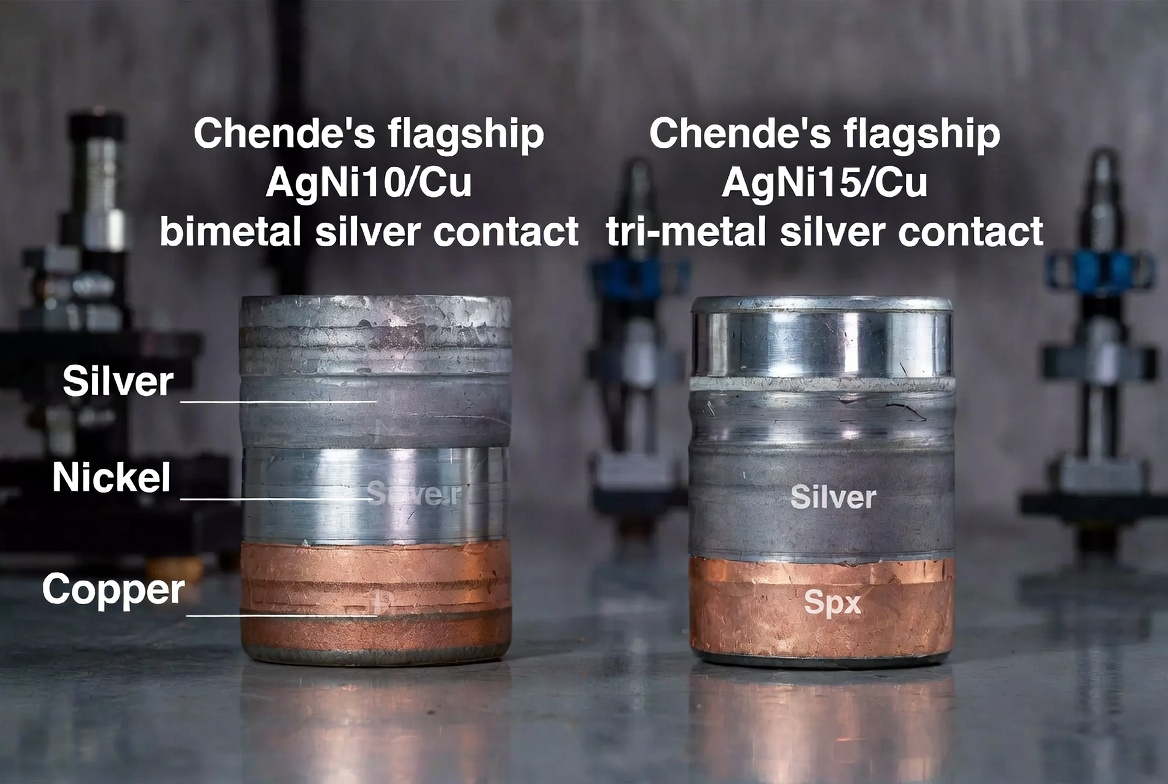
Chende’s flagship AgNi10/Cu bimetal silver contact and AgNi15/Cu tri-metal silver contact are used extensively in signal relays, automotive auxiliary relays, and household appliance controls. Wholesale pricing starts at $0.011 per piece for quantities over 100K.
AgSnO₂ (Silver Tin Oxide) – The 2025 Mainstream RoHS-Compliant Material
AgSnO₂ silver tin oxide contact has become the dominant choice for medium-to-high power applications since the phase-out of toxic cadmium-containing materials. In 2025, over 70% of new relay designs specify AgSnO₂ contact for export markets.
Chende offers multiple variants:
- AgSnO₂(10)/Cu – Standard grade
- AgSnO₂(12)/Cu – Most popular
- AgSnO₂(12)+In₂O₃/Cu – Best temperature rise performance
- AgSnO₂(15)+Bi₂O₃/Cu – Superior anti-welding
Life expectancy under 30–80A AC1 load is 3–5 times longer than AgNi silver contact. Ideal for EV charging piles, solar inverters, and industrial contactors.
AgCdO15/Cu – Legacy Material with Restricted Use
Despite excellent anti-welding properties, AgCdO15/Cu silver cadmium oxide contact is being phased out due to cadmium toxicity. EU RoHS Directive banned its use in new equipment since 2006. Chende continues limited production for legacy replacement only and actively assists customers in migrating to AgSnO2 silver tin oxide contact.
AgW50-70 & AgWC – High Current and High Voltage Specialists
For applications exceeding 500A, silver tungsten contact (AgW50–70) and silver tungsten carbide (AgWC) are unmatched in arc erosion resistance and anti-welding performance under extreme conditions.
Typical applications:
- High-voltage circuit breakers
- Railway traction systems
- Marine switchgear
- Industrial power distribution
Chende supplies both solid and bimetal silver tungsten contact forms with copper or silver backing.
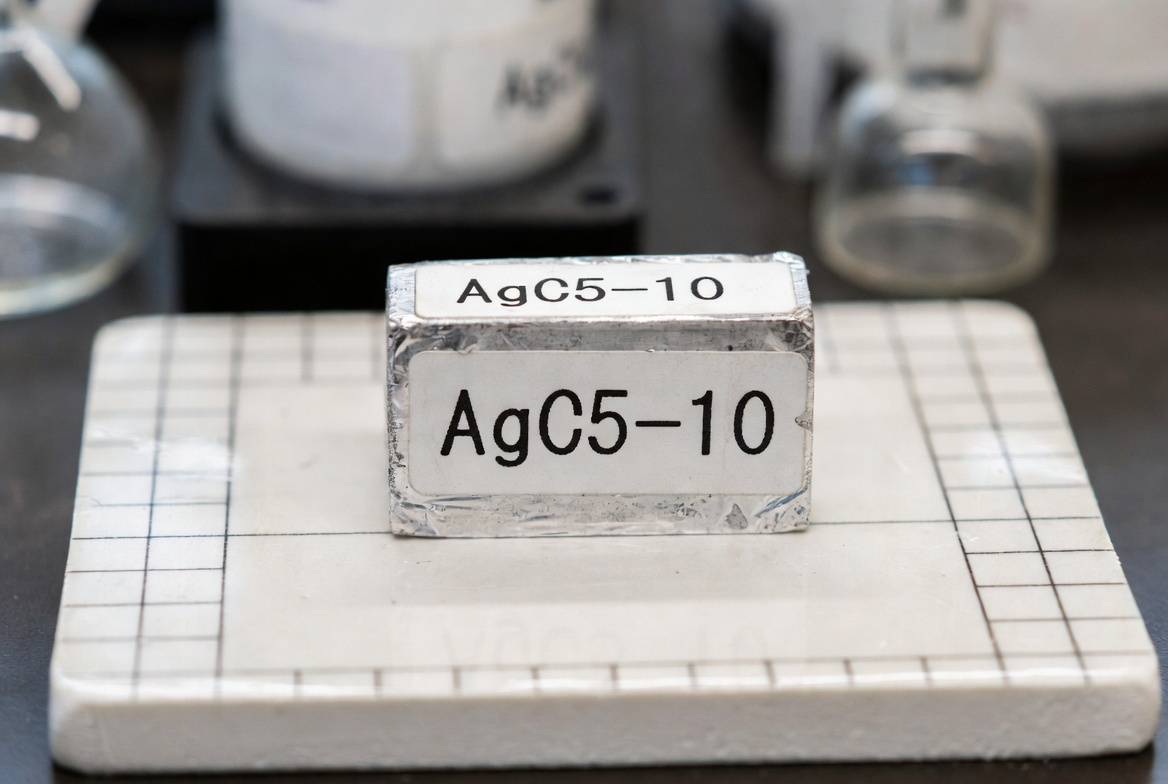
AgC5 & AgC10 – Ultimate DC Anti-Welding Solution
Silver graphite contact (AgC5–10) forms a lubricating carbon layer during arcing, completely preventing material transfer and welding in DC circuits – the primary failure mode in EV pre-charge relays and solar string combiners.
Chende’s AgC5/Cu/Fe tri-metal design reduces silver consumption by 40% while achieving 200,000+ operations under 60VDC/50A conditions.
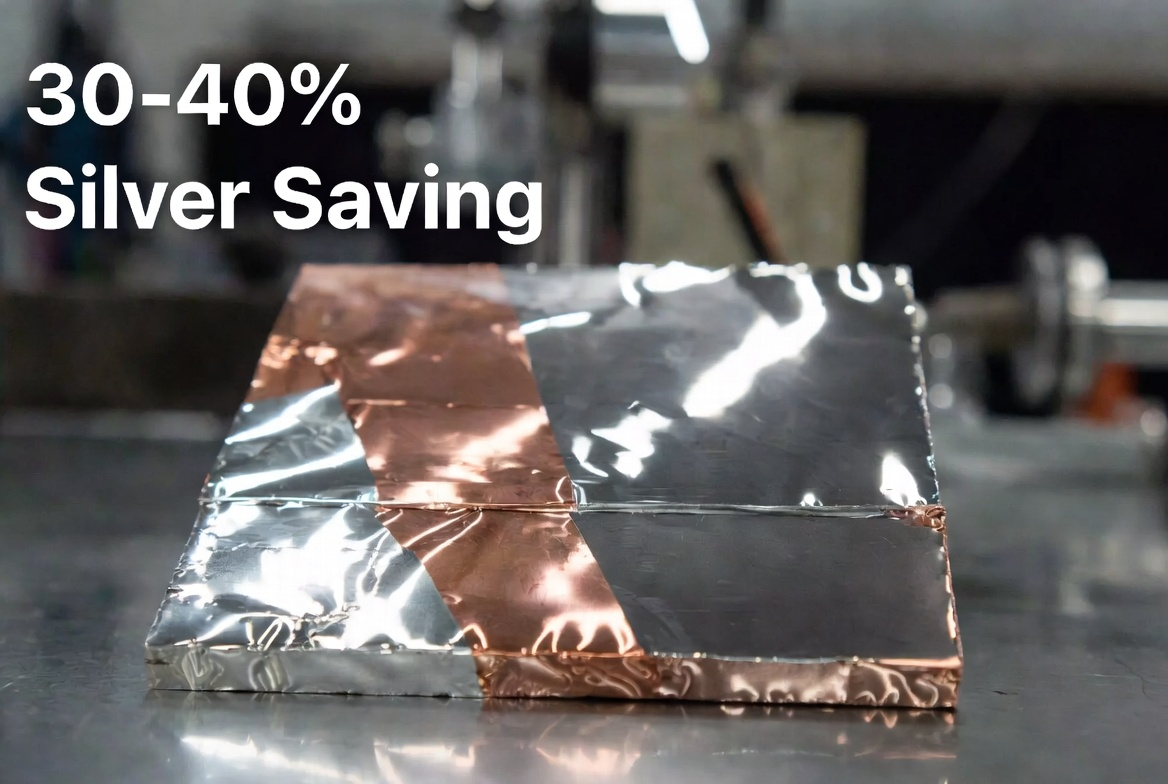
Bimetal vs Tri-metal Silver Contact Design – Cost Optimization Strategy 2025
99% of modern silver contact rivet use composite construction:
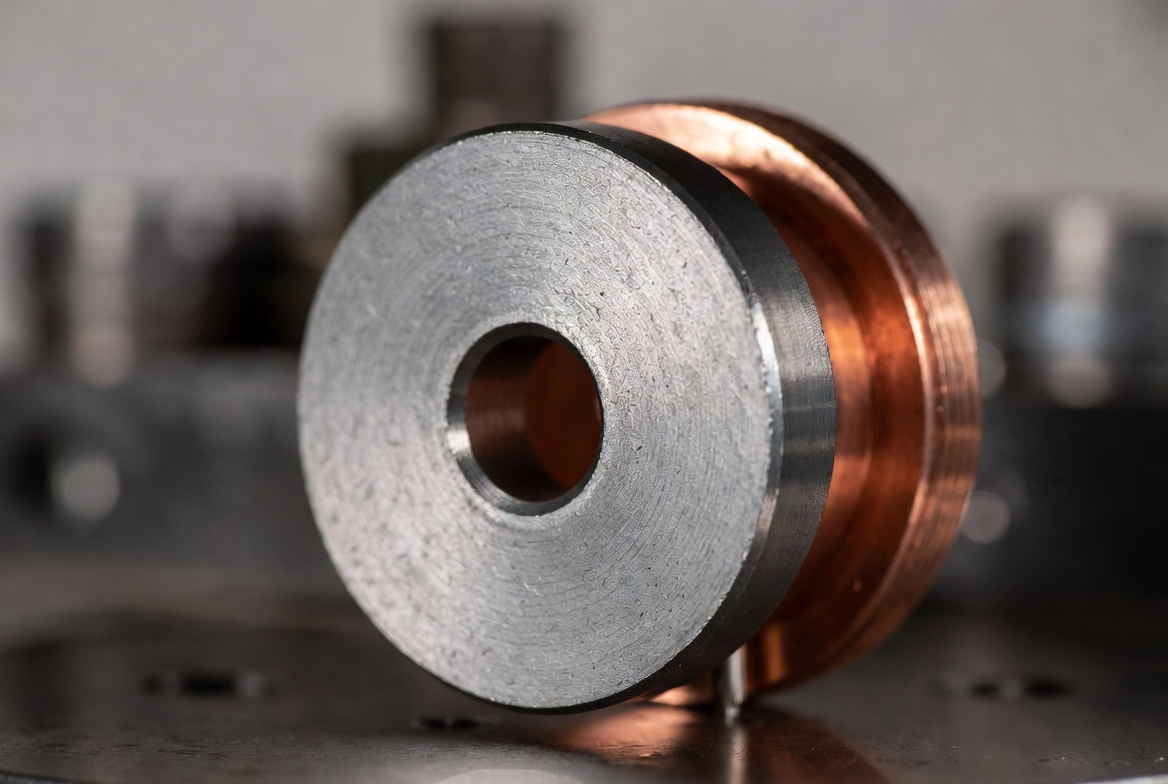
- Bimetal silver contact: Silver alloy layer + copper base
- Tri-metal silver contact: Silver alloy + copper + steel (higher strength, 30–40% silver saving)
Chende pioneered tri-metal technology in 2018 and now supplies over 60% of its automotive customers with this cost-effective solution. All designs pass 100,000-cycle endurance testing per customer specifications.
2025 Silver Contact Wholesale Price Table – Chende Factory Direct
| Material | MOQ | Price USD/pc (100K+) | Typical Application |
|---|---|---|---|
| AgNi10/Cu Bimetal | 10K | 0.011–0.018 | Signal & Automotive Relay |
| AgNi15/Cu Tri-metal | 10K | 0.015–0.025 | Household Appliances |
| AgSnO₂(12)/Cu | 10K | 0.022–0.038 | EV Charger & Solar Inverter |
| AgSnO₂+In₂O₃/Cu | 10K | 0.028–0.045 | Industrial Contactor |
| AgW50/Cu | 10K | 0.15–0.35 | High Voltage Breaker |
| AgC5/Cu/Fe Tri-metal | 10K | 0.025–0.048 | DC Contactor & Motor Starter |
FAQ – Most Asked Questions by Global Buyers in 2025
What is the difference between bimetal and tri-metal silver contact?
Bimetal = silver alloy + copper. Tri-metal = silver alloy + copper + steel backing for higher strength and 30–40% silver saving. Both available at Chende. View all composite silver contacts.
Is AgSnO2 better than AgCdO for EV applications?
Yes. AgSnO2 is non-toxic, RoHS compliant, and offers 3–5× longer life under inductive loads. Chende provides free migration support.
What is the lowest MOQ for custom silver contact rivets?
Only 10,000 pieces at Chende – lowest in China.
How fast can I get free samples?
DHL Express, 3 days worldwide, completely free including shipping.
Do you provide material certificates and test reports?
Yes, RoHS, REACH, SGS, and full electrical life test reports included with every order.
Can you make silver contacts according to my drawing?
Yes, custom design is our specialty. Send drawing → 2-hour quote → 7-day tooling → samples.
What is the lead time for bulk order?
Standard specs: 7–14 days. Custom designs: 21–28 days after sample approval.
Which payment terms do you accept?
T/T, L/C, PayPal, Western Union. 30% deposit, balance before shipment.
Get 2025 Lowest Factory Price & Free Samples Now
MOQ 10K | Same-Day Quote | 3-Day DHL Free Shipping Worldwide
Or visit our product page: Electric Silver Contact Products