

Silver Contact NewsNews
Bimetal Rivets Selection Guide 2026: How to Choose the Right One
Chende Factory – Materials, Sizes, Types & Decision Framework
January 2026 | 48 min read | Chende Electrical Contact R&D Center
Why Bimetal Rivets Selection Is Critical in 2026 – A Factory Perspective
Choosing the right bimetal rivets is not just a technical decision – it's a business one. The wrong material or size can lead to welding failures, arc erosion, overheating, or short life cycles, resulting in warranty claims, downtime, and lost customers. In 2026, with silver prices at $35–40/oz, stricter RoHS regulations, and increasing demands from EV, solar, and smart grid industries, precise bimetal rivets selection has become more important than ever.
At Chende, we've helped hundreds of customers select the perfect bimetal rivets for their relays, contactors, switches, and circuit breakers. This guide is based on our 15 years of production experience, thousands of custom projects, and lab tests. We'll cover materials, sizes, head shapes, performance metrics, selection framework, real cases, and 2026 trends – all to help you choose the best bimetal electrical contacts rivets for your application. For the full bimetal rivets overview, see our main guide Bimetal Rivets Ultimate Guide 2026.
Bimetal Rivets Selection Framework: Key Factors to Consider
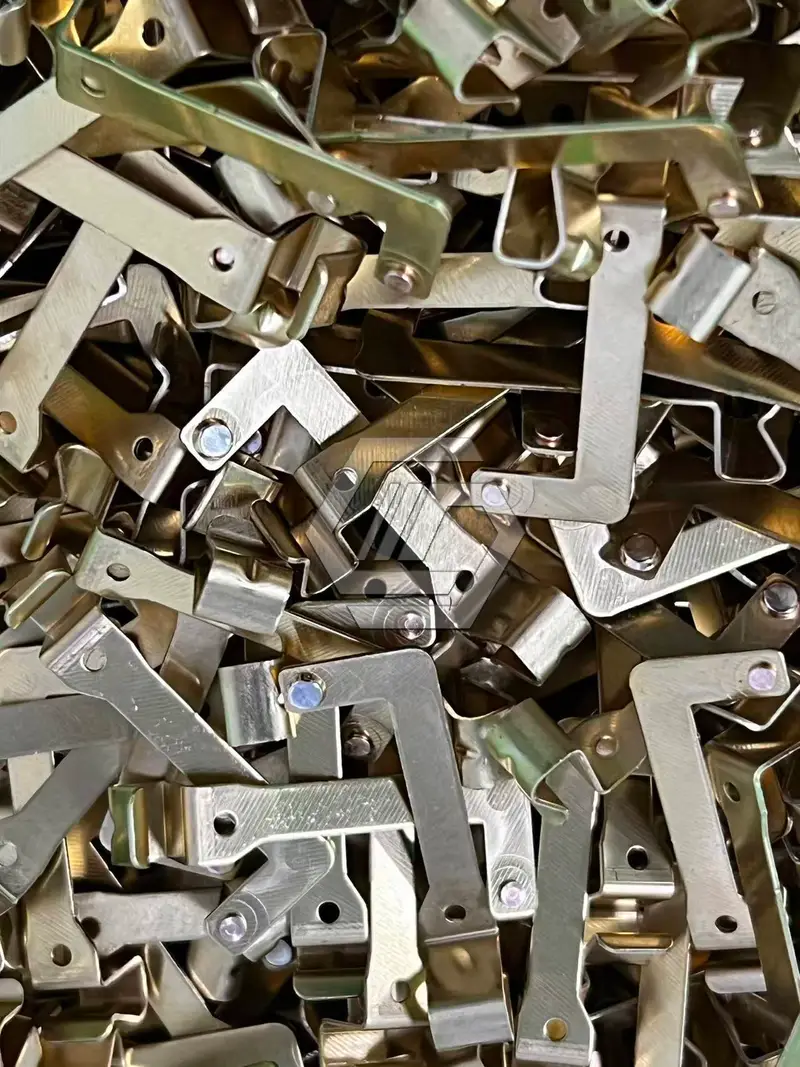
Selecting bimetal rivets involves balancing several factors. Here's our factory's practical framework:
| Factor | Consideration | Recommended Bimetal Rivet Type | Reason |
|---|---|---|---|
| Current Rating | Low (5–30A): High conductivity priority | Ag/Cu or AgNi/Cu | High conductivity (70–105% IACS) |
| Switching Frequency | High: Anti-welding needed | AgNi/Cu or AgSnO2/Cu | Excellent anti-welding force (50–200 N) |
| Voltage Level | High (72.5kV+): Extreme arc resistance | AgW/Cu | Extreme hardness (180–300 HV) |
| Load Type | Inductive/DC: Arc & welding risk | AgSnO2/Cu or AgC/Cu | Superior arc erosion resistance |
| Environment | Humid/Corrosive: Plating required | Gold-plated bimetal rivets | Corrosion resistance |
| Cost | Budget-sensitive: Minimize silver | AgNi/Cu | Best cost-performance balance |
This framework is used daily in our engineering meetings. For example, for automotive relays (12–48V, high frequency), we recommend AgNi20/Cu bimetal rivets. For high-voltage breakers (72.5kV+), AgW50/Cu is the standard. In 2026, RoHS compliance is mandatory, so avoid cadmium-based bimetal rivets. For selection framework, see our main guide Bimetal Rivets Ultimate Guide 2026.
How to Choose Head Shape and Size for Bimetal Rivets
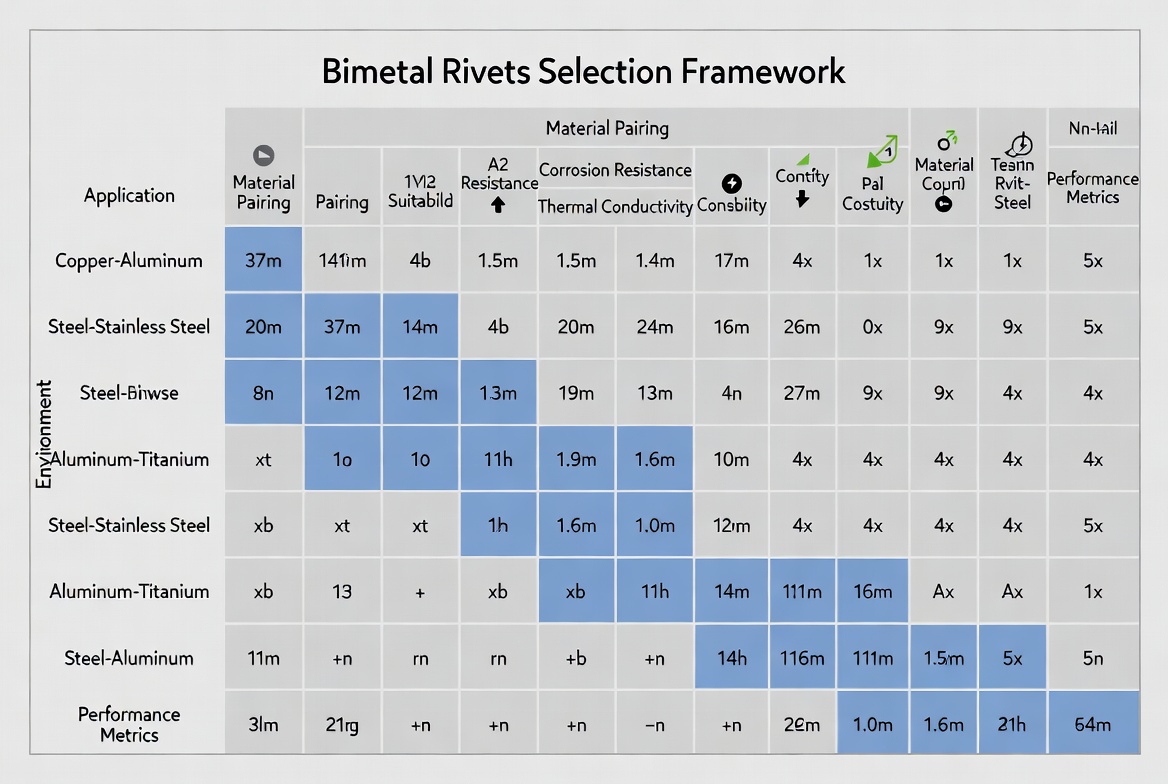
Head shape and size affect contact pressure and stability:
- Flat Head Bimetal Rivets: Uniform pressure, for contactors and switches.
- Round Head Bimetal Rivets: Common in relays, good for general use.
- Square Head Bimetal Rivets: High stability in industrial control.
- Point Head Bimetal Rivets: Precision applications like automotive relays.
Size recommendations: Diameter 1–2 mm for low current, 3–4 mm for high current. Head thickness 0.3–0.8 mm, shank length 2–5 mm. Chende offers custom sizes with tolerances ±0.02 mm. For head shape selection, see Bimetal Rivets Ultimate Guide 2026.
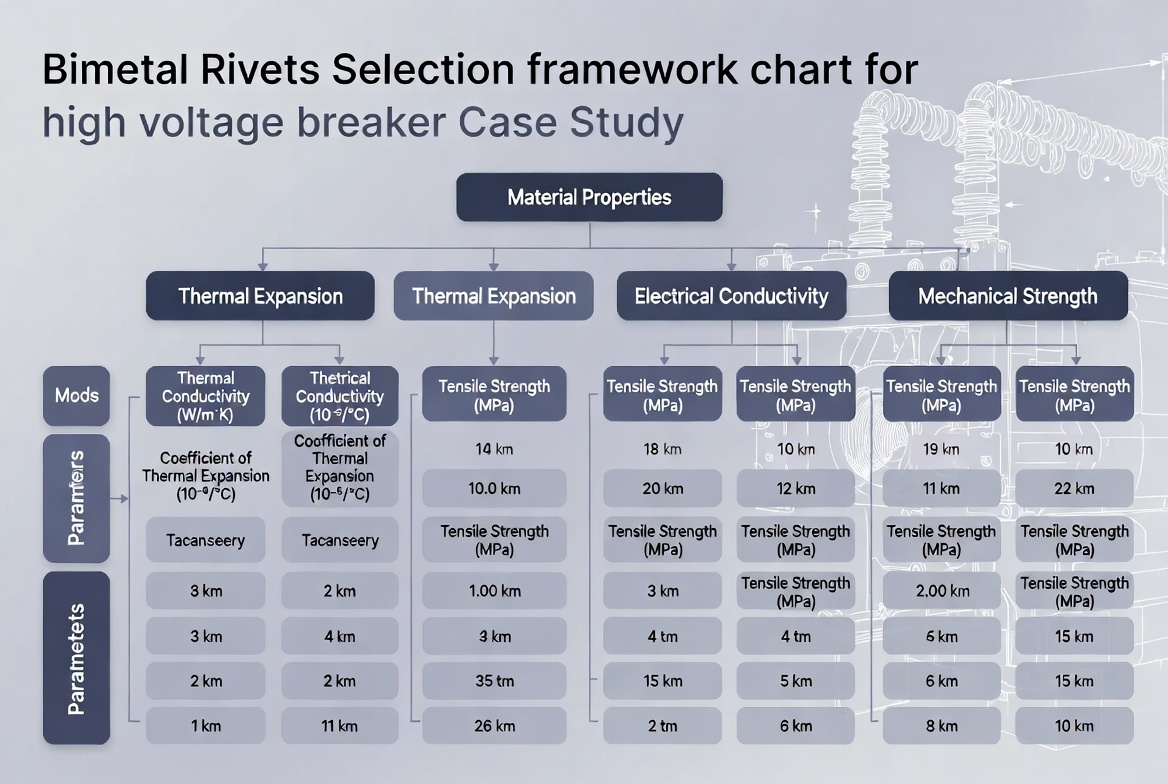
Real Case: Bimetal Rivets Selection for High Voltage Circuit Breaker
A Chinese grid operator was upgrading their 72.5kV substation breakers. Original solid AgW contacts failed after 5,000 operations due to erosion. We helped them select AgW50/Cu bimetal rivets with optimized tungsten particle size. Key improvements:
- Contact resistance reduced from 18 mΩ to 12 mΩ
- Life cycles increased from 5,000 to 12,000+
- Temperature rise lowered under 3150A continuous load
- Arc erosion reduced by 30%
After 12 months of field testing, zero failures. They now order 1 million AgW/Cu bimetal rivets annually. This case shows why proper selection is critical for high voltage. For more cases, see Silver Contact Applications Guide.
2026 Trends: Bimetal Rivets Selection for Smart Grid & EV
By 2026, bimetal rivets selection will evolve with:
- Nano-doping for better arc resistance
- Tri-metal designs for corrosion resistance
- IoT-ready relays with predictive maintenance
- Sustainable materials to meet RoHS updates
Chende is piloting nano-doped AgSnO2/Cu bimetal rivets for EV charging. For trends, see Silver Contact Industry Trends 2025–2030.
Chende Custom Bimetal Rivets Selection: From Design to Delivery
We start with your drawing, help select the best bimetal rivets material and size, prototype in 3 days, and mass produce in 7–14 days. Our team has handled 500+ custom projects. For custom bimetal rivets selection, see The 5 Most Recommended Silver Alloy Contacts for 2025.
Frequently Asked Questions About Bimetal Rivets Selection
How do I choose the right bimetal rivets material?
Choose based on current, voltage, switching frequency, and environment. For high voltage, select AgW/Cu; for inductive loads, AgSnO2/Cu; for medium power, AgNi/Cu.
What size bimetal rivets should I use?
Use 1–2 mm diameter for low current, 3–4 mm for high current. Head thickness 0.3–0.8 mm, shank length 2–5 mm. Chende offers custom sizes.
Are bimetal rivets RoHS compliant in 2026?
Yes, cadmium-free bimetal rivets (AgNi/Cu, AgSnO2/Cu, AgW/Cu) are fully RoHS compliant.
What head shape is best for bimetal rivets?
Flat for uniform pressure, round for general use, square for stability, point for precision.
How do I prevent welding in bimetal rivets?
Use AgSnO2/Cu or AgC/Cu with high anti-welding force (140–200 N), and proper contact pressure.
Related Articles & Resources
- Bimetal Rivets Ultimate Guide 2026 – Chende Factory
- Bimetal Rivets Materials Comparison 2026 – Chende Factory
- Bimetal Rivets for Electrical Contacts in Relays 2026 – Chende Factory
- Bimetal Rivets Manufacturing Process 2026 – Chende Factory
- Bimetal Rivets in High Voltage Applications 2026 – Chende Factory
- Silver Contact Applications in Different Industries 2025
- Silver Contact Manufacturer China 2025 | CDSilver Wholesale
- Silver Contact Materials Ultimate Guide
- All Electric Silver Contact Products
- Best Silver Contact Manufacturer China 2025
Authority References
- World Silver Survey 2025
- IEC 60947 Low-Voltage Switchgear Standards
- UL 508 Industrial Control Equipment
- TE Connectivity Relay Design Guide
- Schneider Electric Contactor Specifications
Get Custom Bimetal Rivets Selection Quote & Free Samples Now
MOQ 10K | Same-Day Quote | 3-Day DHL Free Shipping