Ultimate Guide to Silver Contact Materials: AgNi vs AgSnO2 Deep Dive
A comprehensive 5,000-word analysis exploring the metallurgical properties, electrical erosion dynamics, and mission-critical selection for high-performance switching systems.
At the microscopic level, the closing of an electrical contact is not a simple mechanical event—it is a violent physical collision. At CD Silver (cdsilver.com), we engineer materials that survive plasma formation and localized melting. The primary challenge in contact physics is Constriction Resistance Rc.
When two contact surfaces touch, they only connect at microscopic peaks called "a-spots." The current is forced through these tiny areas, leading to extreme Joule heating. Our AgNi and AgSnO2 materials are formulated to maintain stable Rc even after thousands of cycles.
Formulaic Insight: Constriction resistance is defined by Rc = ρ / 2a, where Resistivity (ρ) is the resistivity and Radius (a) is the radius of the contact spot. High-purity silver in our alloys ensures the lowest possible Resistivity (ρ).
Chapter 2: AgNi - Nickel Dispersion Metallurgy
Silver Nickel (AgNi) is a pseudo-alloy. Since silver and nickel are virtually insoluble in each other, nickel is dispersed as fine particles within the silver matrix. This creates a "structural scaffolding" that resists mechanical deformation.
Why Choose AgNi?
For high-frequency switching and low contact resistance, AgNi is the benchmark. It is widely used in Automotive Control Relays and Smart Home Switches. CD Silver's proprietary cold-heading process ensures that the nickel distribution remains uniform throughout the rivet head.
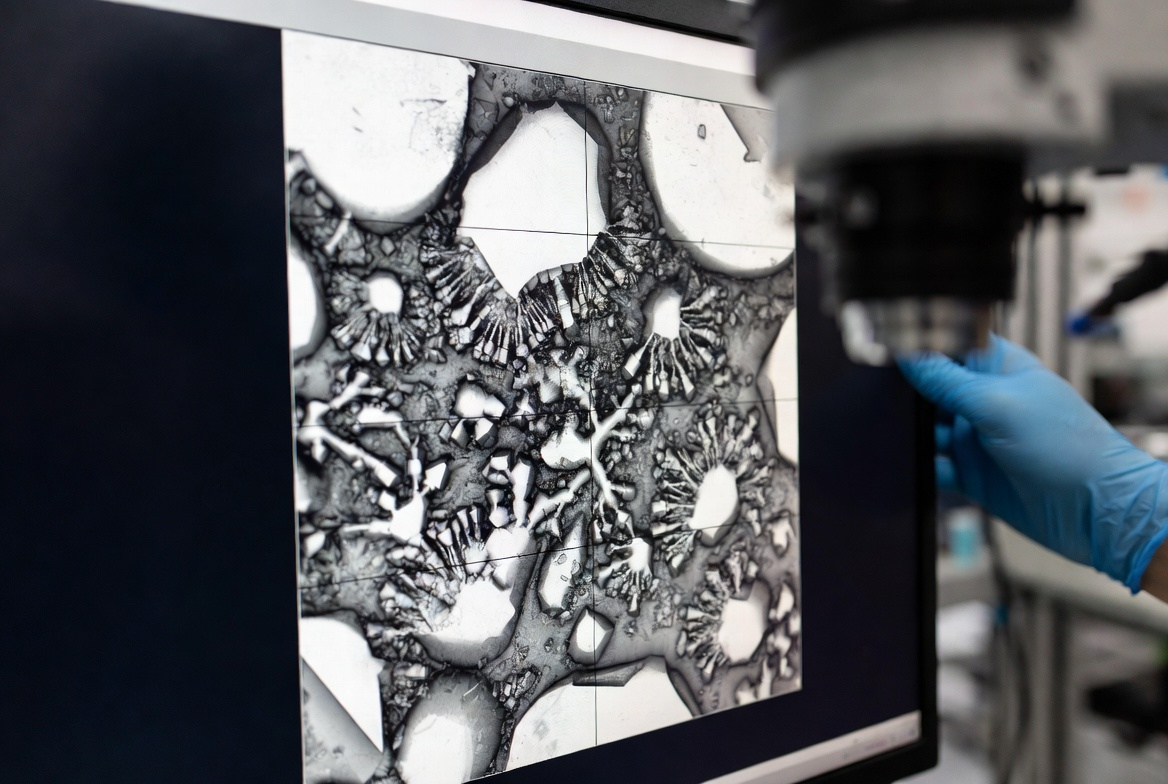
Figure 2.1: SEM Analysis showing uniform Ni dispersion in CD Silver's AgNi10 material.
Chapter 3: AgSnO2 - Internal Oxidation Excellence
Silver Tin Oxide (AgSnO2) is the definitive RoHS-compliant successor to AgCdO. We utilize the Internal Oxidation Process to ensure sub-micron tin oxide particles are distributed with surgical precision.
Parameter
AgNi10
AgSnO2 (12)
Engineering Benefit
Hardness (HV)
85
115
Superior Wear Resistance
Conductivity (%IACS)
90
78
Consistent Thermal Profile
Anti-Welding
Moderate
Exceptional
Critical for DC Surge
Chapter 4: Arc Quenching & Anti-Welding Physics
During contact separation, a plasma arc forms. Arc Quenching determines the component's lifespan. In AgSnO2, tin oxide particles act as "non-stick" spacers. When silver melts, the oxide particles remain solid (melting point >1600°C), breaking the liquid silver bridge and preventing welding.
The Metallurgy of Safety: CD Silver controls the AgSnO2 particle size to between 0.5μm and 2.0μm. This "sweet spot" ensures maximum anti-welding without compromising electrical conductivity.
Chapter 5: Material Transfer & Pitting Dynamics
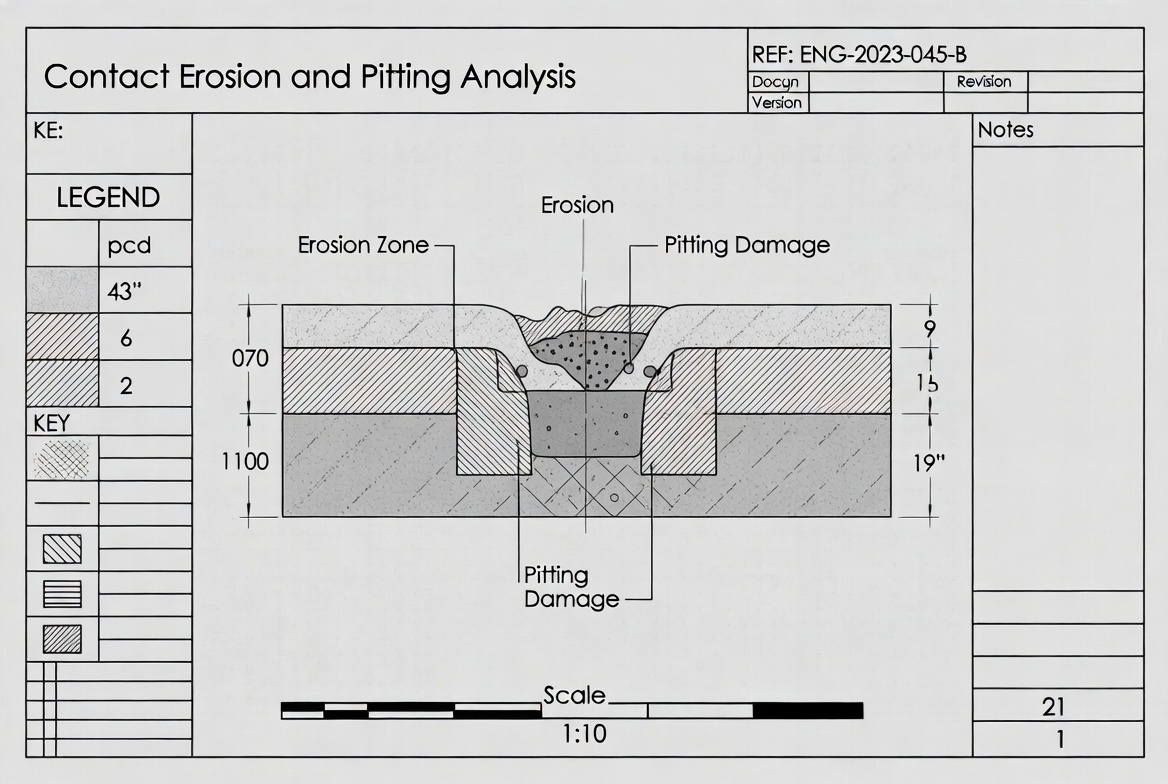
In DC applications, such as Electric Vehicle (EV) Contactors, current always flows in one direction, leading to "Needle and Cup" defects. AgSnO2 provides a more uniform erosion surface compared to AgNi, making it ideal for 1500V Photovoltaic (PV) inverters.
Figure 5.1: Surface pitting comparison after 100,000 cycles at 40A DC load.
Chapter 6: IATF 16949 Testing Standards
At CD Silver, professional grade means rigorous testing. We adhere to IATF 16949 standards, conducting shear strength tests on bimetal rivets, grain analysis via high-magnification microscopy, and real-world electrical life cycle simulations.
Chapter 7: HVDC & Photovoltaic (PV) Applications
The rise of renewable energy has pushed silver contact technology to its limits. In 1500V DC solar systems, the lack of a "zero-crossing" point makes arcs extremely difficult to extinguish. Our specialized AgSnO2In2O3 (Silver Tin Indium Oxide) materials are specifically engineered for these high-voltage DC environments.
Chapter 8: Sustainability & RoHS Compliance
Sustainability is no longer optional. CD Silver was an early adopter of cadmium-free materials. We ensure 100% RoHS and REACH compliance across all silver contact rivets and copper parts, helping our global partners meet stringent environmental regulations.