

Silver Contact News
Bimetal Rivets Manufacturing Process 2026: Step-by-Step Guide
Chende Factory – From Powder to Finished Rivet
January 2026 | 48 min read | Chende Electrical Contact R&D Center

Why Understanding Bimetal Rivets Manufacturing Process Matters in 2026
As a leading bimetal rivets manufacturer in China, we at Chende know that the quality of bimetal rivets starts with the manufacturing process. Bimetal rivets, with their silver alloy head bonded to a copper base, require precision at every step to ensure high conductivity, arc resistance, anti-welding, and long life cycles. In 2026, with silver prices high and RoHS regulations stricter, a well-controlled manufacturing process is key to producing cost-effective, high-performance bimetal electrical contacts rivets.
This guide takes you through the entire bimetal rivets manufacturing process – from raw materials to final inspection – based on our 15 years of factory experience, daily production of 500,000+ pieces, and customer feedback from automotive, industrial, and renewable energy sectors. We'll cover each step, common challenges, quality control, and 2026 advancements. For the full bimetal rivets overview, see our main guide Bimetal Rivets Ultimate Guide 2026.
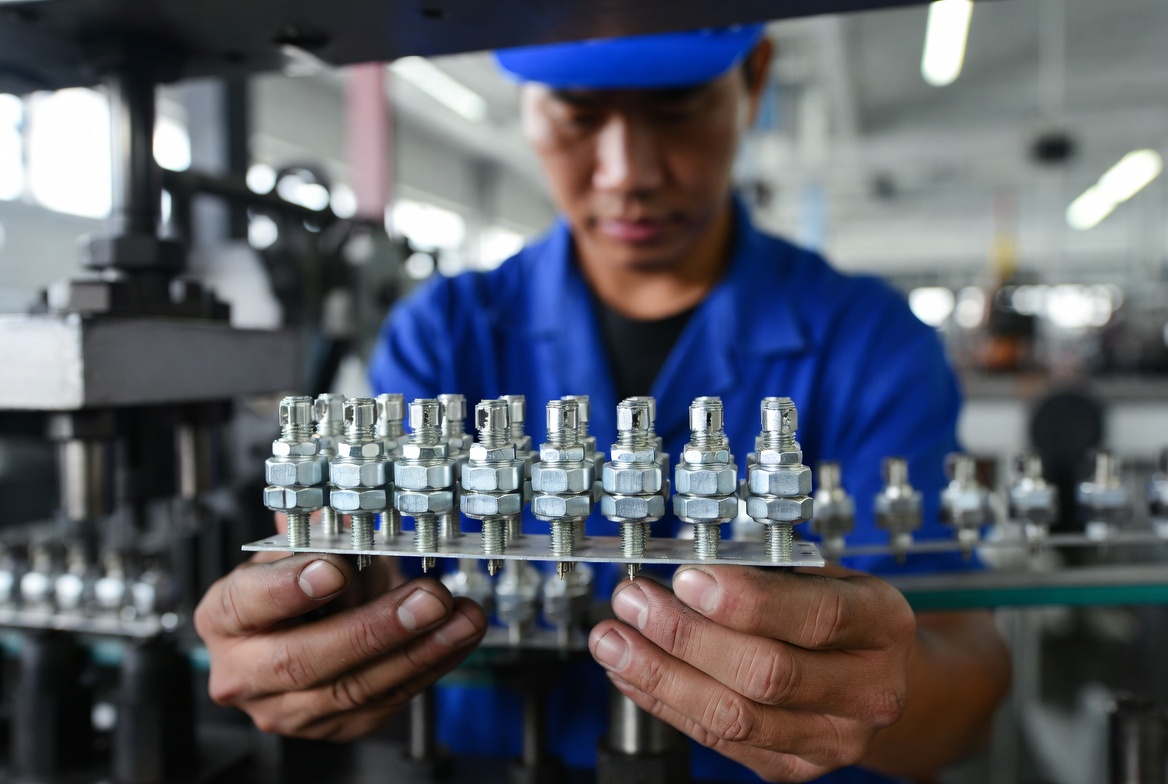
Step 1: Raw Materials Preparation for Bimetal Rivets
The foundation of high-quality bimetal rivets is in the raw materials. We use high-purity silver powder (99.99%) and alloy additives (Ni, SnO2, W, C) for the head, and oxygen-free copper for the base.
- Silver Powder: Particle size 1–10 microns for uniform mixing and dense sintering.
- Alloy Additives: Nickel for anti-welding, tin oxide for arc resistance, tungsten for high-temperature strength.
- Copper Base: Oxygen-free copper rods or sheets for excellent conductivity and heat dissipation.
We source materials from certified suppliers and test each batch for purity and particle distribution. This step ensures consistency in the final bimetal contact rivets. For raw materials quality control, see Best Silver Contact Manufacturer China 2025.
Powder Mixing and Blending for Silver Alloy Head
Mixing is critical. We use high-energy ball mills to blend silver powder with alloy additives for 4–8 hours, achieving uniform distribution. This prevents hotspots during sintering and ensures consistent performance in silver bimetal rivets.
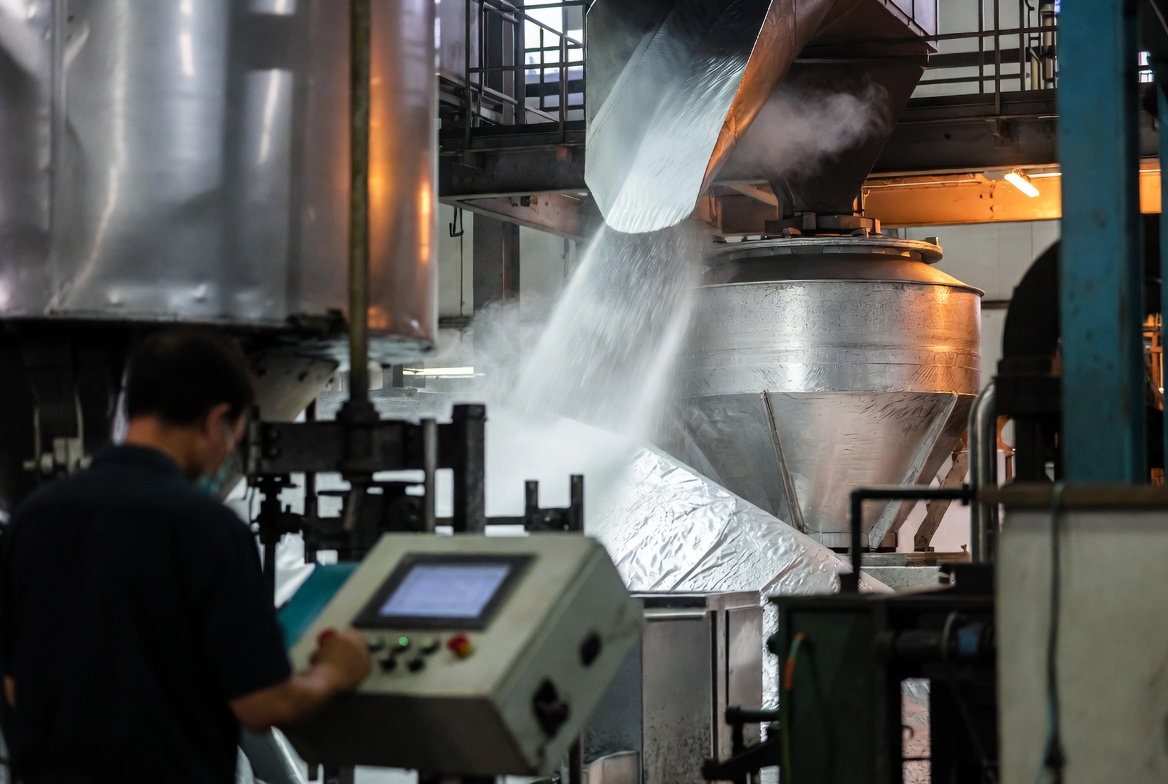
Step 2: Pressing & Sintering the Silver Alloy Head
After mixing, the powder is pressed into head blanks using hydraulic presses (500–1000 tons). The blanks are then sintered in a controlled atmosphere furnace at 800–1100°C, depending on the alloy (AgNi at 850°C, AgSnO2 at 900°C, AgW at 1100°C).
Sintering forms a dense microstructure without voids, critical for arc resistance in bimetal rivets. We use vacuum or hydrogen atmosphere to prevent oxidation. Sintered heads achieve 98–99% theoretical density. For sintering process details, see Bimetal Rivets Ultimate Guide 2026.
Cold Heading the Copper Base
The copper base is formed by cold heading copper rods into shanks with precise diameters (1–4 mm). This step ensures high mechanical strength and perfect fit with the silver head. We use multi-station heading machines for high-speed production.
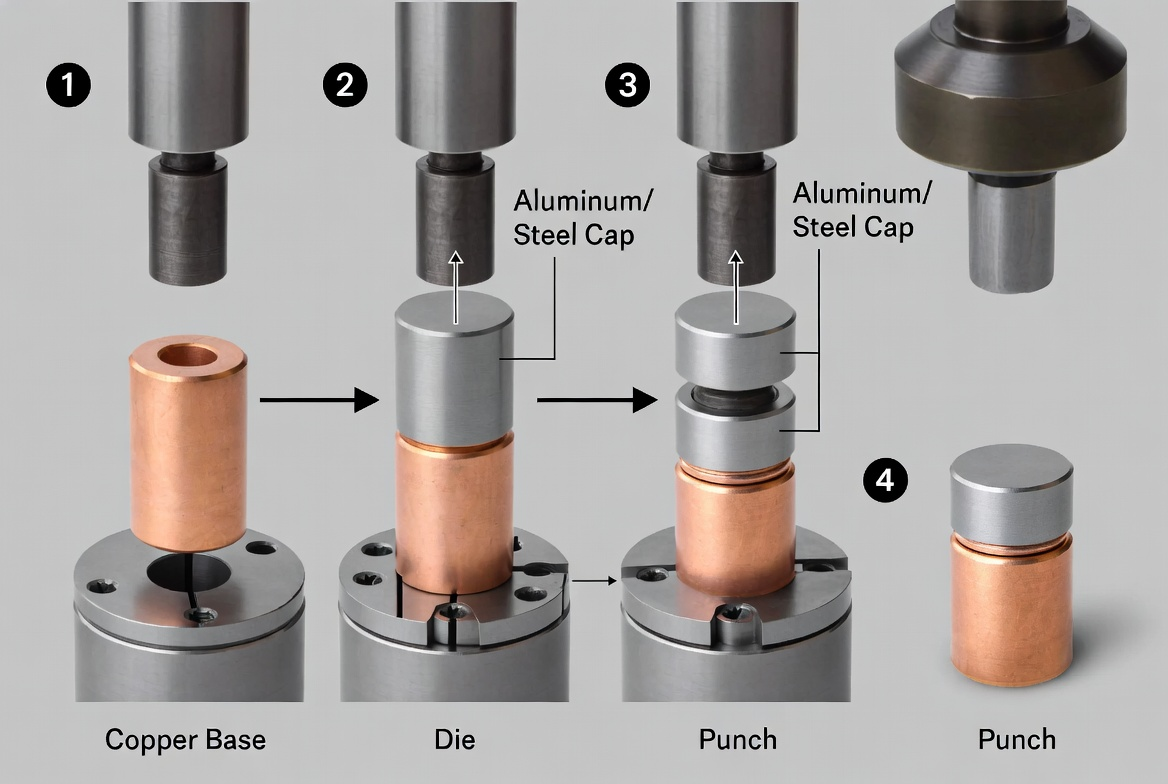
Step 3: Bonding the Silver Head to Copper Base
Bonding is the most critical step. We use high-pressure cold welding (800–1200 N force) or hot welding (for AgW) to join the silver alloy head to the copper shank. The bond strength must exceed 100 N to prevent delamination under high current.
Our automated bonding machines ensure consistency, with 100% inspection for bond integrity using ultrasonic testing. This step is why our bimetal rivets achieve 99.97% yield. For bonding technology, see Bimetal Rivets Ultimate Guide 2026.
Step 4: Forming, Plating & Final Inspection
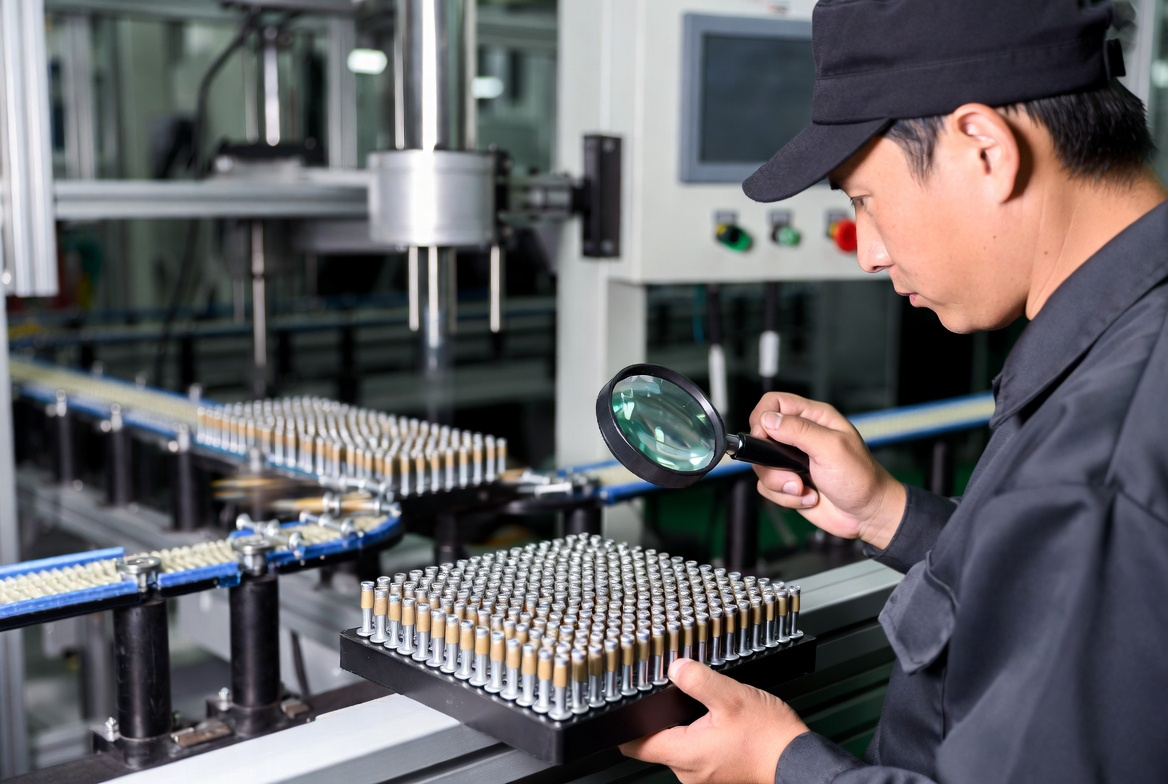
After bonding, the rivets are stamped into final shapes (flat, round, square, point heads). Optional gold or nickel flash plating is applied for corrosion resistance. Final inspection includes:
- 100% optical check for dimensions and surface defects
- Hardness testing (HV)
- Contact resistance measurement
- Bond strength test
- Random arc erosion and anti-welding tests
Only perfect bimetal rivets pass. For quality control, see Best Silver Contact Manufacturer China 2025.
Common Manufacturing Challenges & Solutions for Bimetal Rivets
From our experience, top challenges are:
- Delamination: Prevent with optimized welding pressure and surface preparation.
- Porosity in Head: Control sintering temperature and atmosphere.
- Uneven Alloy Distribution: Use high-energy mixing and nano-sized powders.
- Corrosion: Apply gold/nickel plating for humid environments.
- Low Yield: Implement 100% inspection and automated lines.
Our process solves these issues, achieving 99.97% yield. For failure prevention, see Top 12 Silver Contact Failure Modes & Prevention.
2026 Trends: Advancements in Bimetal Rivets Manufacturing
By 2026, bimetal rivets manufacturing will see:
- Nano-sized powders for uniform alloy distribution
- Automated AI inspection for 100% defect detection
- Tri-metal designs (AgSnO2/Ni/Cu) for enhanced performance
- Eco-friendly processes to reduce waste
Chende is piloting nano-doping and AI inspection for bimetal rivets. For trends, see Silver Contact Industry Trends 2025–2030.
Chende Custom Bimetal Rivets Manufacturing: From Design to Delivery
We start with your drawing, select the best manufacturing process, prototype in 3 days, and mass produce in 7–14 days. Our team has handled 500+ custom projects. For custom bimetal rivets, see The 5 Most Recommended Silver Alloy Contacts for 2025.
Frequently Asked Questions About Bimetal Rivets Manufacturing
How are bimetal rivets manufactured?
Bimetal rivets are manufactured using powder metallurgy for the silver alloy head and cold heading for the copper base, followed by high-pressure bonding, stamping, plating, and 100% inspection.
What is the most important step in bimetal rivets manufacturing?
Bonding the silver alloy head to the copper base is the most critical step, requiring precise pressure and surface preparation to prevent delamination under high current.
How do you ensure quality in bimetal rivets production?
We use 100% optical inspection, hardness testing, contact resistance measurement, bond strength tests, and random arc erosion tests for every batch.
What materials are used in bimetal rivets manufacturing?
High-purity silver powder, alloy additives (Ni, SnO2, W, C), and oxygen-free copper are used, with particle size controlled for uniformity.
Are bimetal rivets manufacturing processes RoHS compliant?
Yes, our cadmium-free bimetal rivets manufacturing processes meet RoHS and REACH regulations for 2026.
Related Articles & Resources
- Bimetal Rivets Ultimate Guide 2026 – Chende Factory
- Bimetal Rivets Materials Comparison 2026 – Chende Factory
- Bimetal Rivets for Electrical Contacts in Relays 2026 – Chende Factory
- Bimetal Rivets in High Voltage Applications 2026 – Chende Factory
- Bimetal Rivets Selection Guide 2026 – Chende Factory
- Silver Contact Applications in Different Industries 2025
- Silver Contact Manufacturer China 2025 | CDSilver Wholesale
- Silver Contact Materials Ultimate Guide
- All Electric Silver Contact Products
- Best Silver Contact Manufacturer China 2025
Authority References
- World Silver Survey 2025
- IEC 60947 Low-Voltage Switchgear Standards
- UL 508 Industrial Control Equipment
- TE Connectivity Relay Design Guide
- Schneider Electric Contactor Specifications
Get Custom Bimetal Rivets Manufacturing Quote & Free Samples Now
MOQ 10K | Same-Day Quote | 3-Day DHL Free Shipping