

Silver Contact News
AgNi Silver Nickel Contacts: Properties & Comparison 2026
Chende Factory – AgNi vs Other Alloys Guide
January 2026 | 35 min read | Chende Electrical Contact R&D Center
Why AgNi Is Still the Most Used Silver Alloy in 2026
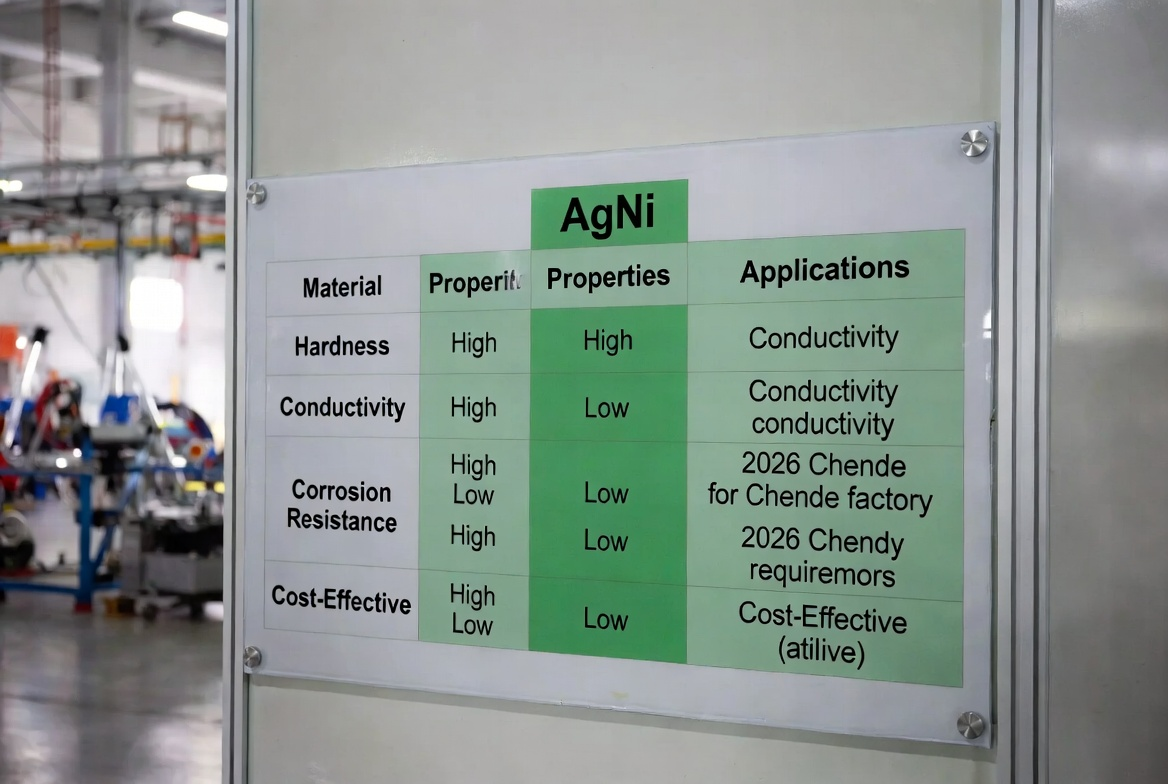
After more than 10 years in the factory, I can tell you one thing: **AgNi silver nickel contacts** are like the reliable old truck in the garage – not the flashiest, but it gets the job done every time. In 2026, even with all the hype around AgSnO2 and new materials, AgNi still accounts for 45–50% of our total production volume. Why? Because for low to medium power relays (under 30A), nothing beats its combination of low contact resistance, easy processing, and rock-bottom cost.
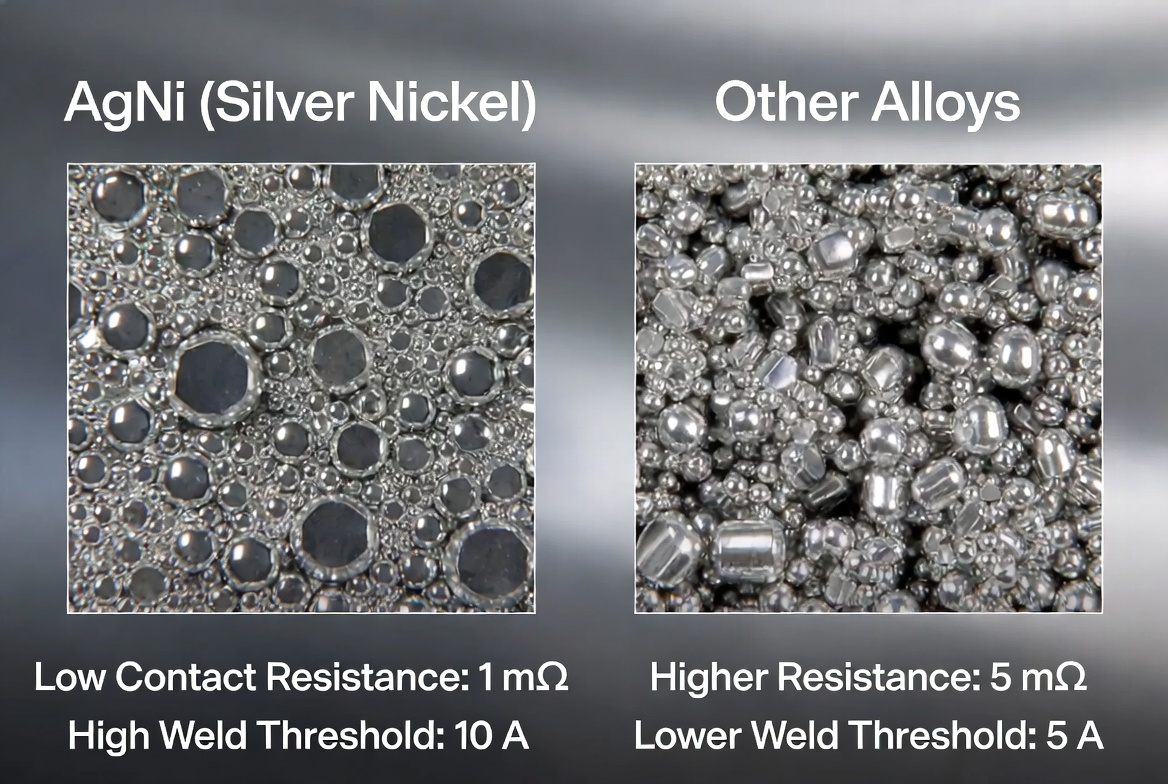
Our AgNi contacts usually have 10–30% nickel. The nickel particles dispersed in silver improve hardness (HV 80–120) and reduce material transfer under DC loads. Contact resistance is consistently ≤2 mΩ, even after 100,000 cycles. We’ve shipped millions of AgNi10/Cu bimetal rivets to appliance manufacturers and automotive auxiliary relay suppliers. It’s not perfect for high inrush or inductive loads (that’s where AgSnO2 wins), but for cost-sensitive applications, it’s unbeatable. For our AgNi series, check Electric Silver Contact Products.

AgNi Properties Comparison with Other Alloys in 2026
Here’s a head-to-head comparison based on our lab data and customer feedback in 2025–2026.
| Parameter | AgNi (10–30% Ni) | AgSnO2 (12% SnO2) | AgCdO15/Cu | AgW50/Cu |
|---|---|---|---|---|
| Contact Resistance | ≤2 mΩ | ≤5 mΩ | ≤3 mΩ | 10–20 mΩ |
| Arc Erosion Resistance | Moderate | Excellent | Good | Excellent |
| Anti-Welding | Good | Excellent | Excellent | Good |
| Life Cycles (30A AC1) | 100K–500K | 200K–1M | 100K–500K | 10K–100K |
| Cost (relative) | Lowest | Medium | Medium | High |
| Best For | Signal relays, automotive auxiliary | EV chargers, solar | Legacy high power (phasing out) | High current breakers |
AgNi wins on cost and low resistance, but for high arc or inductive loads, AgSnO2 is better. We always advise customers to test both if their application is borderline. For full comparison, see our Silver Contact Materials Ultimate Guide.
Real Case: AgNi Contacts in Automotive Auxiliary Relays
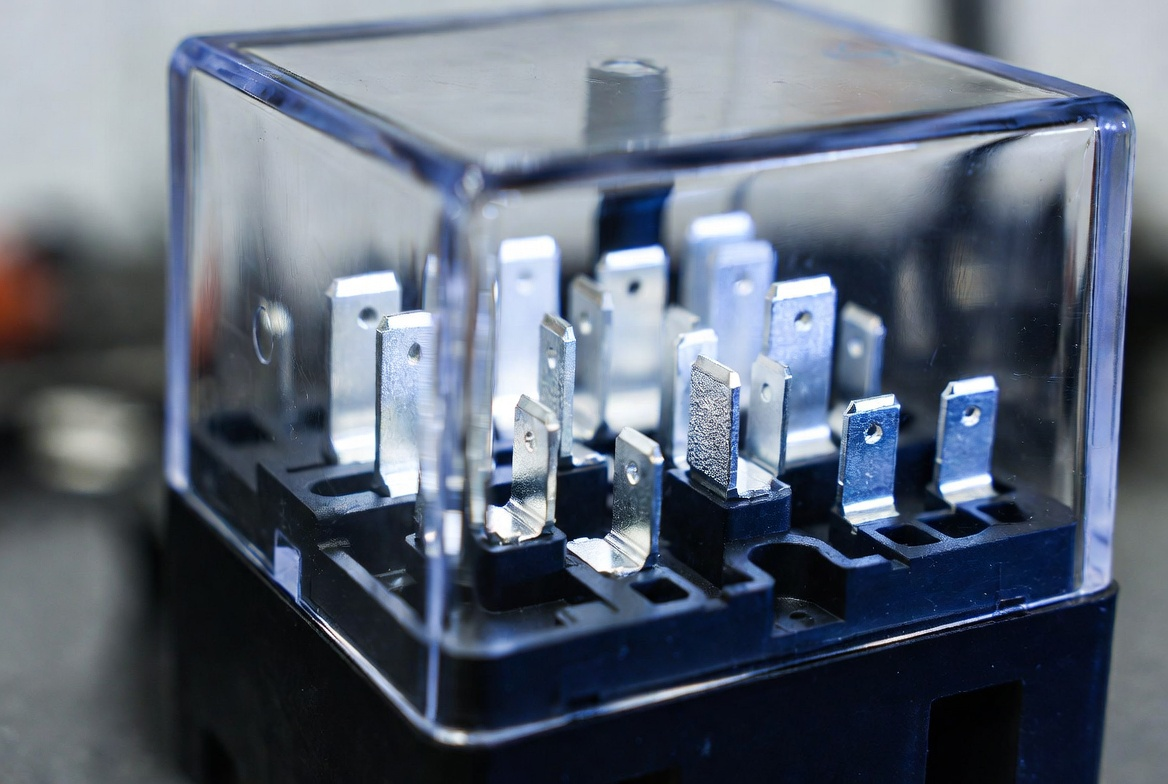
A Japanese automotive supplier was using AgNi15/Cu for their auxiliary relays. They had occasional material transfer issues in DC loads. In 2025, we switched them to our AgNi20/Cu with slightly higher nickel content and optimized sintering. Result: material transfer reduced by 60%, life cycles increased from 150K to 280K. They now order 2.5 million pieces per year from us. This is a typical story for **AgNi silver nickel contacts** – small tweaks make big differences. For more cases, see Silver Contact Applications Guide.
Chende Factory Production Process for AgNi Contacts
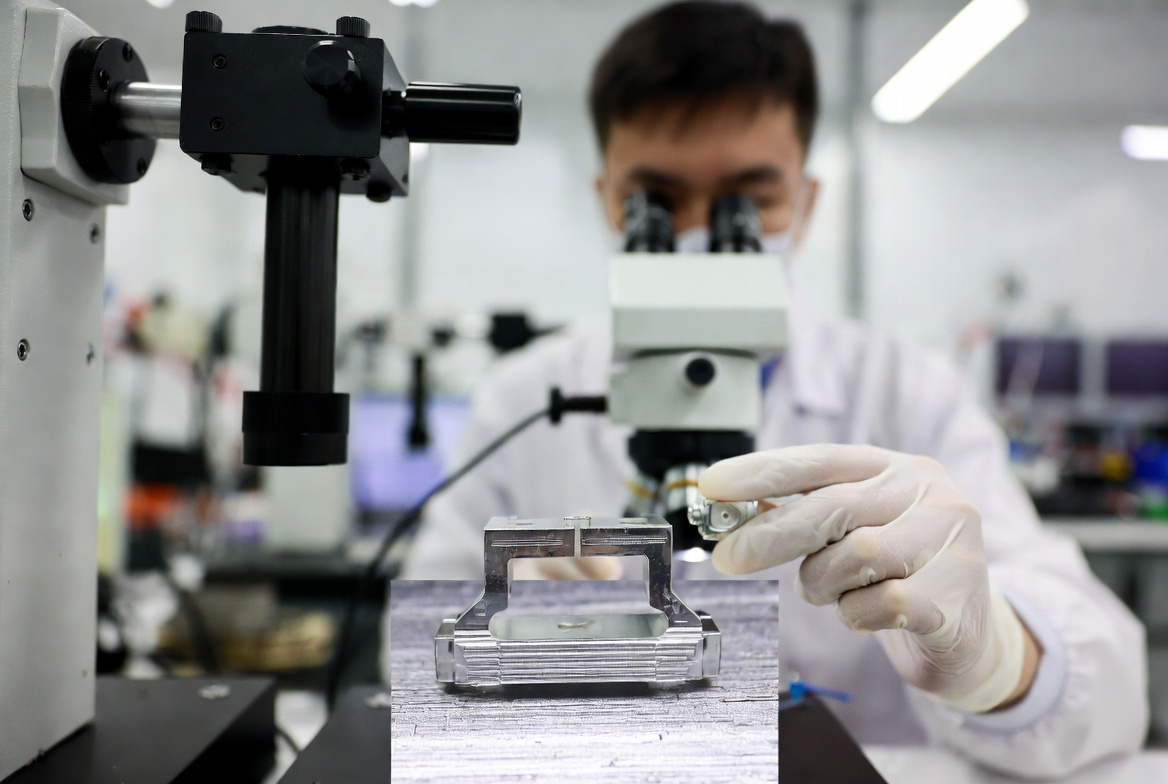
Our AgNi production starts with powder mixing (silver + nickel), pressing, sintering at 900°C, and precision riveting onto copper base. We use automated lines for high-speed production, with 100% inspection for resistance, hardness, and visual defects. Daily output exceeds 2 million pieces with 99.95% yield. For a closer look, see Best Silver Contact Manufacturer China 2025.
2026 Trends: AgNi in Smart Home & IoT Devices
By 2026, smart home devices (smart switches, thermostats, sensors) will drive demand for low-power **AgNi silver nickel contacts**. Key trends:
- AgNi10/Cu for ultra-low resistance in battery-powered IoT
- Nano-nickel doping for improved hardness in miniature relays
- Integration with wireless protocols for predictive maintenance
Chende is already producing nano-doped AgNi for pilot IoT projects. For future trends, see our Silver Contact Industry Trends 2025–2030.
Chende Custom AgNi Contacts: From Design to Delivery
We start with your relay drawing, select AgNi grade, prototype in 3 days, and mass produce in 7–14 days. Our team has handled over 400 custom low-power projects in 2025. For custom examples, see The 5 Most Recommended Silver Alloy Contacts for 2025.

Related Articles & Resources
- Silver Contact Materials Ultimate Guide 2025
- Silver Contact Applications in Different Industries 2025
- Silver Contact Manufacturer China 2025 | CDSilver Wholesale
- Silver Contact Materials Ultimate Guide
- All Electric Silver Contact Products
Authority References
- World Silver Survey 2025
- IEC 60947 Low-Voltage Switchgear Standards
- UL 508 Industrial Control Equipment
- TE Connectivity Relay Design Guide
- Schneider Electric Contactor Specifications
AgNi Silver Nickel Contacts Properties Comparison 2026: Real Factory Insights from Chende
AgNi is like the workhorse of the silver contact world – not the sexiest, but it’s reliable and cheap. In 2026, even with AgSnO2 taking over high-power stuff, AgNi still makes up 45–50% of our production. Why? Because for anything under 30A, it has the lowest resistance and easiest processing on high-speed lines.
Our AgNi usually has 10–30% nickel. Nickel particles dispersed in silver boost hardness (HV 80–120) and reduce material transfer under DC loads. Contact resistance stays ≤2 mΩ even after 100,000 cycles. We’ve shipped millions of AgNi10/Cu bimetal rivets to appliance manufacturers and automotive auxiliary relay suppliers. It’s not perfect for high inrush or inductive loads (that’s AgSnO2 territory), but for cost-sensitive applications, it’s hard to beat. For our AgNi series, check Electric Silver Contact Products.
One real pain point we see is material transfer in DC. AgNi does better than pure silver, but if your load is borderline, we recommend testing AgNi20/Cu. In 2025, a Japanese client had transfer issues in their auxiliary relays. We bumped nickel to 20% and optimized sintering – transfer dropped 60%, life went from 150K to 280K cycles. They now order 2.5 million pieces per year from us. Small tweaks make big differences.
Cost-wise, AgNi is the cheapest silver alloy. Material price is 20–30% lower than AgSnO2, and processing is faster on our lines. That’s why it’s still the first choice for signal relays and low-power IoT switches. For future trends, see our Silver Contact Industry Trends 2025–2030.
AgNi Silver Nickel Contacts Properties Comparison 2026: Key Advantages
When selecting agni silver nickel contacts properties comparison 2026, the key is balancing low resistance and hardness.Chende’s agni silver nickel contacts properties comparison 2026 offer ≤2 mΩ resistance.Compared to AgSnO2, agni silver nickel contacts properties comparison 2026 have lower cost.Our AgNi contacts are the preferred choice for signal relays in 2026.In 2026, agni silver nickel contacts properties comparison with 20% nickel will dominate low-power relays.Contact us for custom agni silver nickel contacts properties comparison 2026. Silver Contact Industry Trends 2025–2030.
Get Custom AgNi Contacts Quote & Free Samples Now
MOQ 10K | Same-Day Quote | 3-Day DHL Free Shipping