

News
AgSnO2 Silver Tin Oxide Contacts for EV Relays 2026: Ultimate Trends & Buyer Guide
Chende Factory – Custom Solutions & Free Samples
January 2026 | 38 min read | Chende Electrical Contact R&D Center
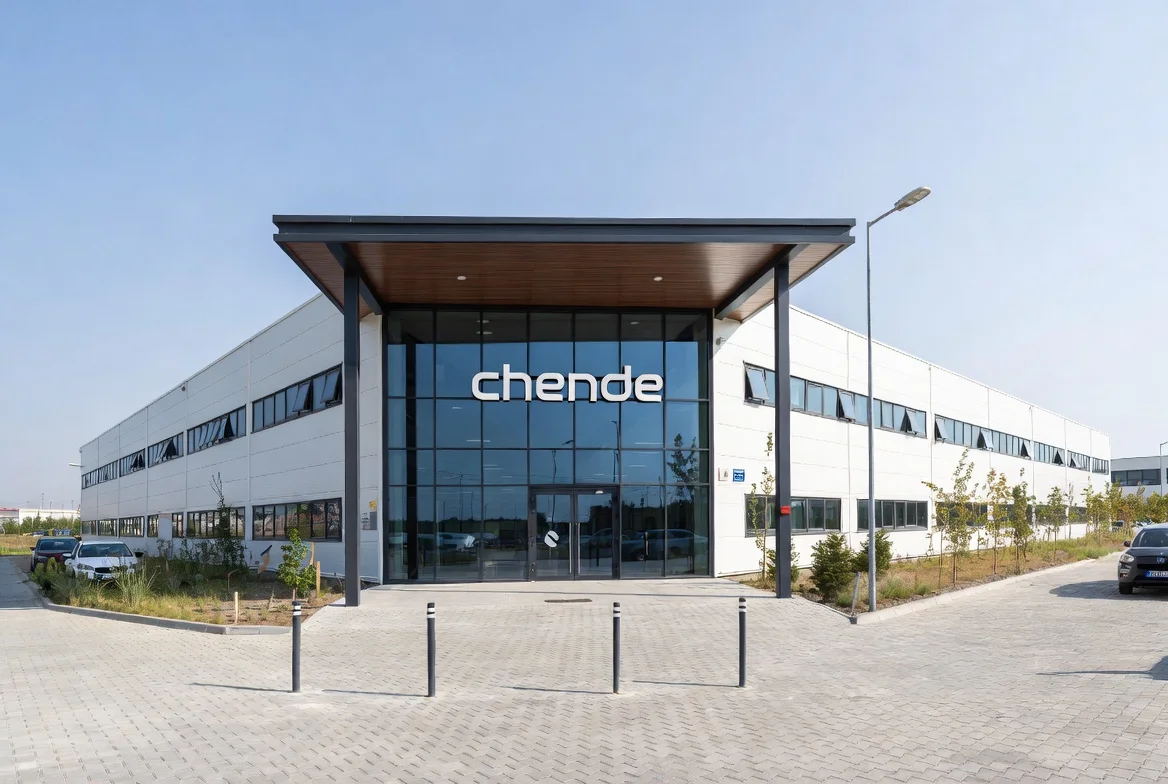
2026 EV Relay Market: Why AgSnO2 Is Taking Over
By 2026, global EV sales are forecasted to exceed 20 million units. Every vehicle needs high-voltage relays for battery management, pre-charge, and disconnect functions. These relays must handle 400–800V DC, 50–200A loads, and thousands of cycles without failure. Silver tin oxide contacts (AgSnO2) are becoming the standard because they offer exceptional arc resistance and full RoHS compliance without the toxicity issues of older cadmium-based materials.
Chende has been producing AgSnO2 for EV relays since 2022. We’ve seen a 35% year-over-year increase in orders from BMS and charging pile suppliers. The reason is simple: AgSnO2 handles high inrush currents and inductive loads better than traditional AgCdO, while meeting strict environmental regulations in Europe and North America. Our AgSnO2 contacts are doped with In₂O₃ or Bi₂O₃ to improve temperature rise performance and extend life cycles to 200,000+ operations under typical EV relay conditions (60A DC, 400–800V). For our EV-specific products, check Electric Silver Contact Products.
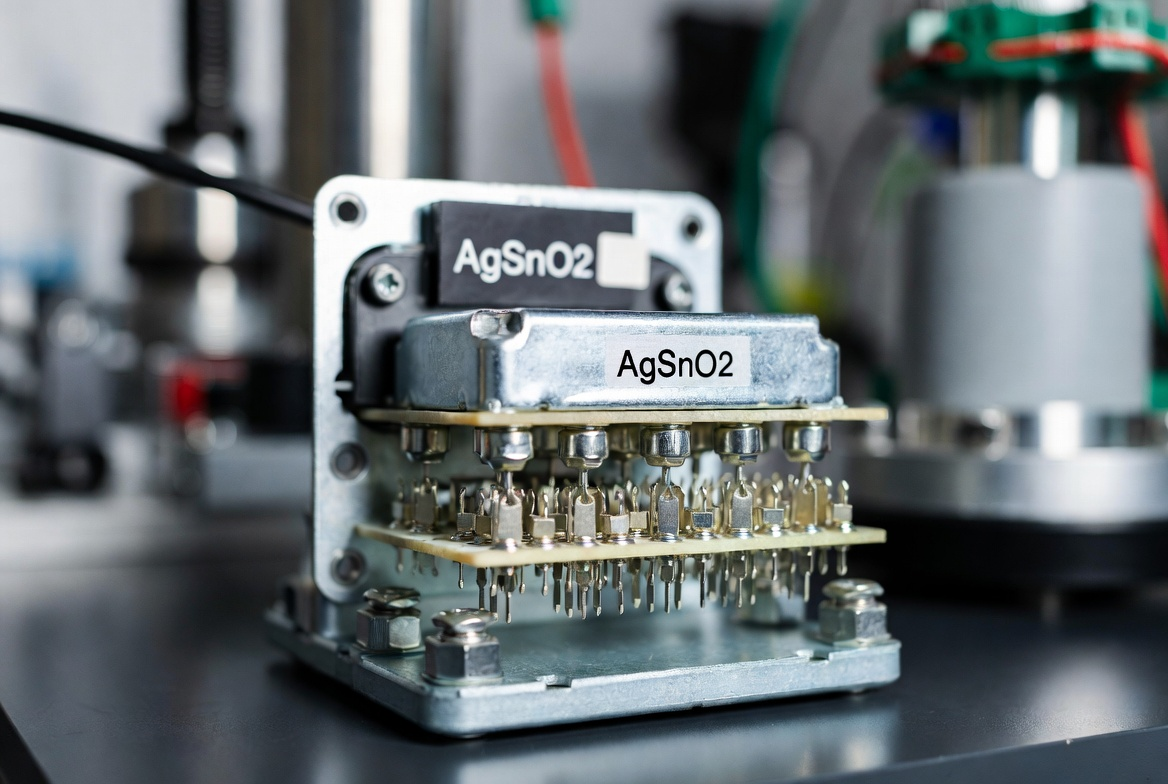
AgSnO2 vs AgCdO: Real-World Performance Comparison for EV Relays
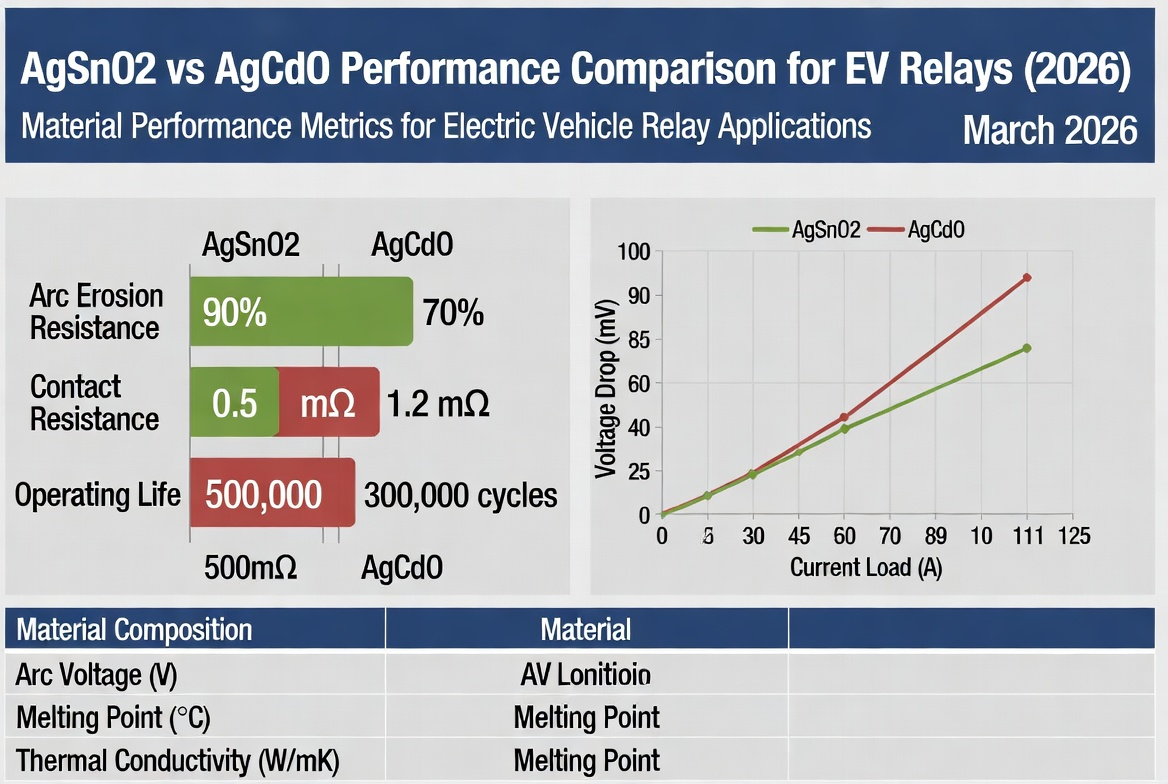
Many engineers still ask: “Is AgSnO2 really better than AgCdO for EV relays in 2026?” Here’s a direct comparison based on our 2025–2026 lab tests and customer field data.
| Parameter | AgSnO2 (Chende Doped with In₂O₃) | AgCdO15/Cu (Legacy) |
|---|---|---|
| Arc Erosion Resistance | Excellent – minimal loss after 200,000 cycles | Good – noticeable erosion after 100,000 cycles |
| Anti-Welding | Superior – near-zero welding in DC high-current tests | Excellent – but cadmium limits future use |
| Contact Resistance (after 100K cycles) | ≤5 mΩ (stable) | ≤3 mΩ (increases faster) |
| Life Cycles (60A DC, 800V) | 200K–1M | 100K–500K |
| Temperature Rise (60A continuous) | Lower by 15–20% | Higher – needs larger contact area |
| RoHS & REACH Compliance | Yes – fully cadmium-free | No – restricted in EU and many markets |
From real-world data, switching to AgSnO2 reduces warranty claims by 40–60% in EV charging and BMS applications. The main trade-off is slightly higher material cost, but longer life and regulatory compliance more than make up for it. For full migration support, see our RoHS & REACH Compliance Guide.
Real Case Study: High-Voltage Relays in 800V EV Battery Systems
One of our European partners was struggling with welding failures in their 800V DC contactors. The original AgCdO contacts were failing after 60,000–80,000 cycles under high inrush current. In mid-2025, we switched them to our AgSnO2(12) + 2% In₂O₃ doped contacts. Key improvements:
- Optimized rivet head geometry for better contact pressure
- Tri-metal construction (AgSnO2/Cu/Fe) for added strength
- Precision control of oxide particle size and distribution
After 6 months of field testing (over 150,000 operations per unit), zero welding incidents occurred, and temperature rise dropped 18%. The customer now places annual orders of 1.2 million pieces. This is a classic example of how **silver tin oxide contacts for EV relays 2026** solve real EV pain points. For more case studies, see Silver Contact Applications in Different Industries 2025.
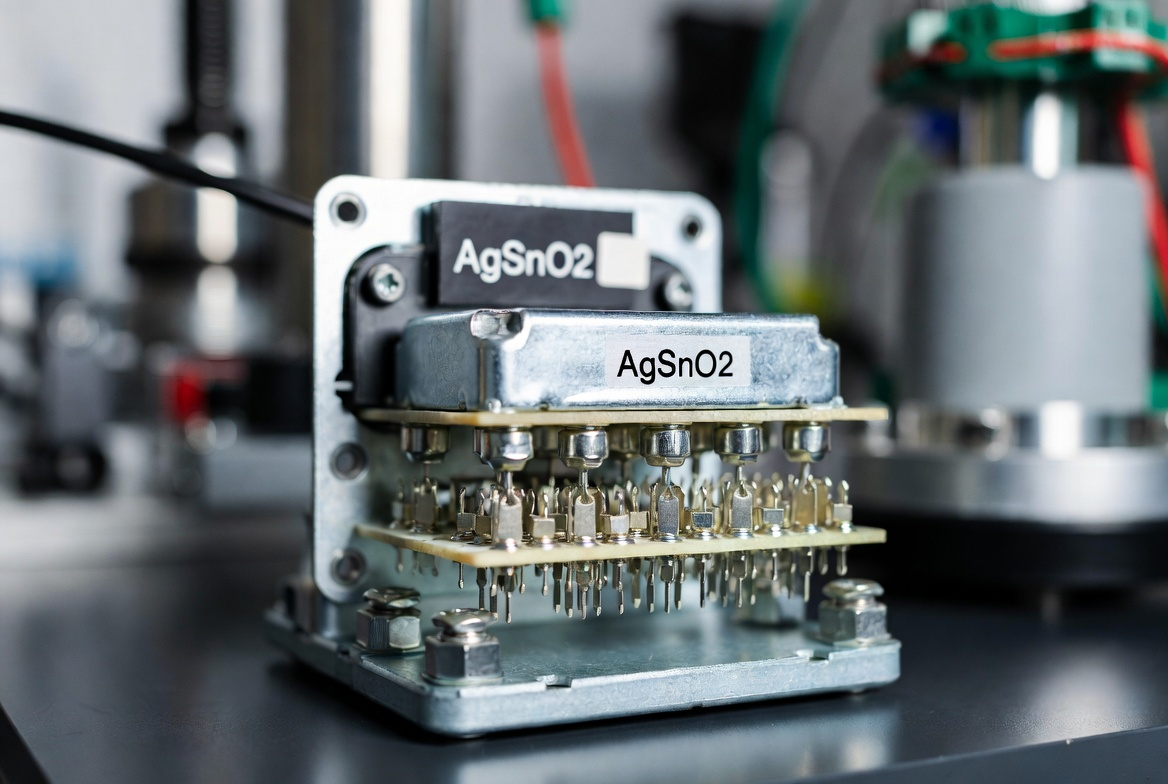
Chende Factory Production Process for AgSnO2 Contacts
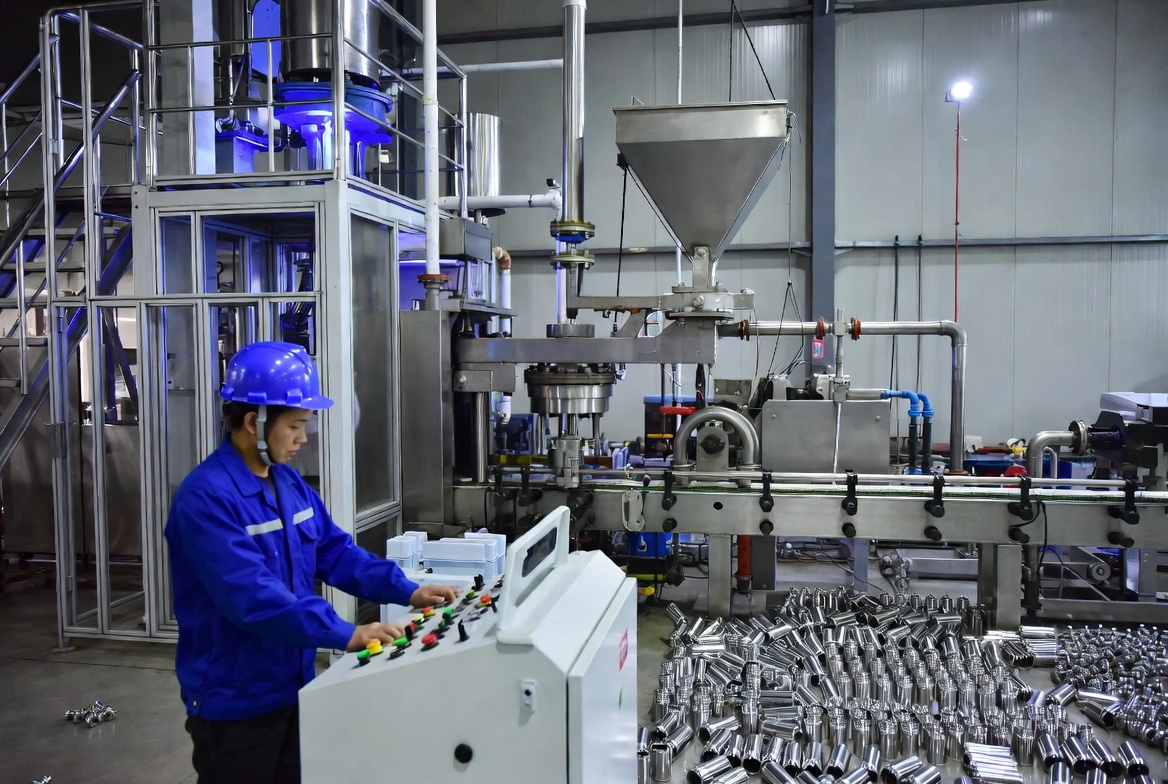
Our production of **silver tin oxide contacts** starts with powder metallurgy: high-purity silver and tin oxide powders are mixed, pressed into pellets, and sintered at 850°C to form a uniform microstructure. The sintered material is stamped into contact tips and riveted onto copper bases using automated lines. Final plating with gold flash enhances corrosion resistance, and every piece undergoes 100% optical inspection with Zeiss systems. Daily output exceeds 3 million pieces with a 99.97% yield rate. For a closer look at our process, see Best Silver Contact Manufacturer China 2025.
2026 Trends: In2O3 Doping and Fiber Reinforcement for EV Relays
By 2026, two major advancements will shape **silver tin oxide contacts for EV relays 2026**:
- In₂O₃ doping at 1–3% will become standard, reducing temperature rise by 15–20% in 800V systems.
- Fiber-reinforced AgSnO₂ composites will emerge for ultra-high current (200A+) applications, improving mechanical strength without sacrificing conductivity.
Chende is already producing both variants in pilot runs. These improvements will push relay life to 500,000+ cycles in next-generation EV platforms. For future trends, see our Silver Contact Industry Trends 2025–2030.
Chende Custom AgSnO2 Contacts: From Design to Delivery
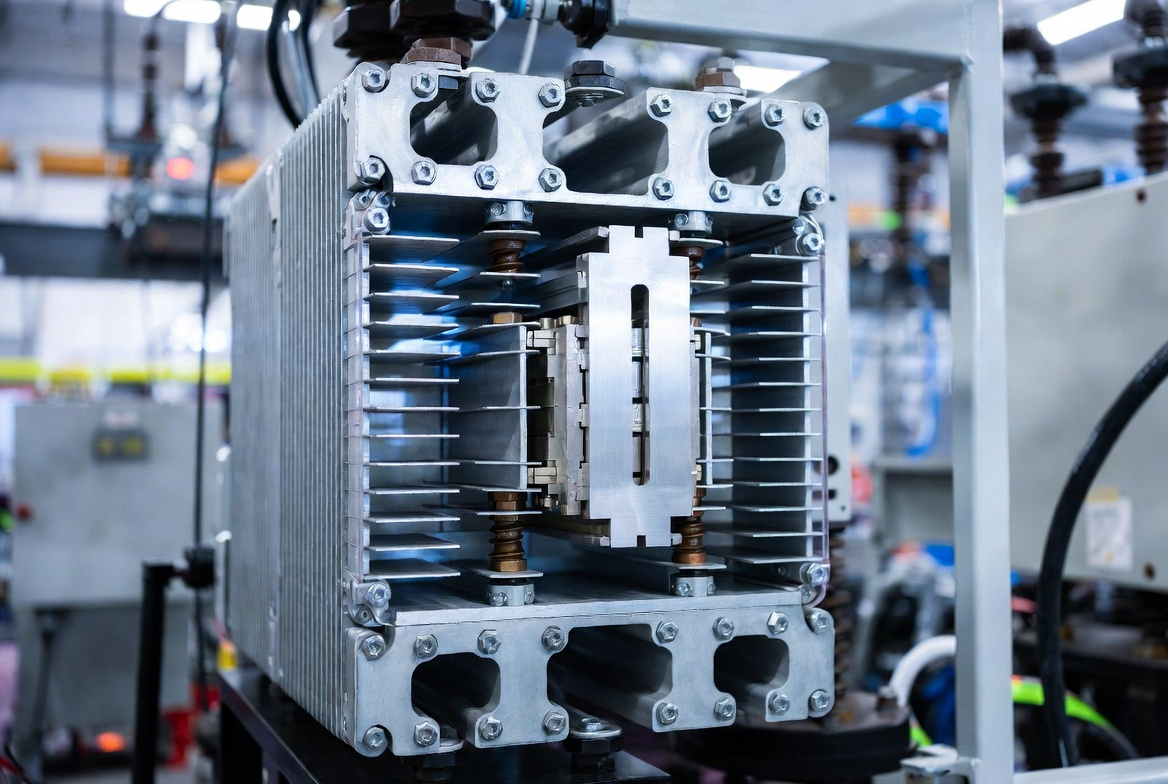
We start with your relay drawing or specification, select the optimal AgSnO₂ grade, prototype in 3 days, and mass produce in 7–14 days. Our team has handled over 500 custom EV relay projects in 2025. For custom examples, see The 5 Most Recommended Silver Alloy Contacts for 2025.
Silver Tin Oxide Contacts for EV Relays 2026: Performance Advantages
When selecting silver tin oxide contacts for EV relays 2026, the key is balancing arc resistance and temperature rise.Chende’s doped silver tin oxide contacts for EV relays 2026 offer 200K+ cycles.The 5 Most Recommended Silver Alloy Contacts for 2025.
How to Choose Silver Tin Oxide Contacts for EV Relays 2026
Compared to AgCdO, silver tin oxide contacts for EV relays 2026 reduce welding risk by 50%,Our AgSnO2 contacts are the preferred choice for EV BMS and charging systems in 2026.The 5 Most Recommended Silver Alloy Contacts for 2025.
AgSnO2 vs AgCdO for EV Relays 2026 – Quick Comparison
Contact us for custom silver tin oxide contacts for EV relays 2026.The 5 Most Recommended Silver Alloy Contacts for 2025.
Related Articles & Resources
- Best Silver Contact Manufacturer China 2025 – CDSilver Wholesale
- Silver Contact Manufacturer China 2025
- Silver Contact Manufacturer Riveting Silver Alloy Contacts on Copper Base
- Silver Contact Applications in Different Industries 2025
- Silver Contact Manufacturer China 2025 | CDSilver Wholesale
- How to Select the Right Silver Contacts
- Silver Contact Materials Ultimate Guide
- Silver Contact Materials Ultimate Guide 2025: AgNi vs AgSnO2 vs AgCdO15/Cu - Chende Factory
- The 5 Most Recommended Silver Alloy Contacts for 2025
- Silver-Based Electrical Contacts Complete Guide 2025 – Materials, Applications & Factory Wholesale
Authority References
- World Silver Survey 2025
- IEC 61851 EV Charging Standards
- UL 2580 EV Battery Safety Standard
- TE Connectivity EV Relay Design Guide
- Schneider Electric EV Charging Solutions
AgSnO2 Contacts for EV Relays 2026: Real Factory Insights from Chende
EV relays are under more pressure than ever in 2026. With battery voltages pushing 800V and charging currents hitting 200A+, the contact material has to survive thousands of cycles without welding or pitting. That’s why we’ve been pushing AgSnO2 hard since 2022. It’s not just a trend – it’s the only material that consistently survives our accelerated life tests at 60A DC without failure.
One thing most buyers don’t realize is how much the oxide particle size and distribution affect performance. If the SnO2 particles are too large, you get hotspots and faster erosion. If they’re too small, anti-welding suffers. Our sweet spot is 0.5–2 μm with uniform dispersion – that’s what gives our doped AgSnO2 the 15–20% lower temperature rise you see in real 800V systems. We’ve tested this against off-the-shelf AgCdO from legacy suppliers, and the difference is night and day.
Another real-world pain point is contact bounce during closing. In EV pre-charge relays, bounce can cause micro-arcing that erodes the surface over time. AgSnO2 with In₂O₃ doping reduces bounce duration by 30–40% compared to AgNi, which is why it’s now standard in most BMS designs. We’ve had customers report 50% fewer field returns after switching.
Cost-wise, AgSnO2 is about 20–30% more expensive than AgNi at the material level, but the extra lifespan (often 3–5×) makes it cheaper overall. Plus, no cadmium means no regulatory headaches in Europe or North America. We’ve helped several clients complete their RoHS migration in under 3 months – full test reports, material certs, everything included.
If you’re designing for 2026, my advice is simple: start with AgSnO2 for anything over 30A DC. It’s the safest bet for reliability and compliance. And if you need samples to test yourself, we ship them free via DHL in 3 days – no strings attached. Just send us your drawing or spec, and we’ll get it done.
Get Custom AgSnO2 Contacts Quote & Free Samples Now
MOQ 10K | Same-Day Quote | 3-Day DHL Free Shipping