

Silver Contact News
Silver Electrical Contacts Guide 2025: Types, Uses & Best Materials
December 2025 | Honestly written from factory experience | Chende Electrical – China
Real Talk: Why Silver Electrical Contacts Still Rule Switching Devices
I've been working with electrical contacts for over a decade now, and honestly, nothing beats silver when it comes to low resistance and reliable switching. Silver electrical contacts just conduct better than anything else out there – about 63 million siemens per meter at room temperature, way ahead of copper or gold alloys. That's why almost every serious relay, contactor, breaker, and switch still uses some form of silver electrical contact in 2025.
But pure silver is soft and welds too easily under heavy loads, so most real-world silver electrical contacts are alloys or composites. That's where things get interesting – and where most buyers get confused. I'll walk you through the main types we actually make and ship every day at Chende, what works, what doesn't, and why certain materials are fading out fast.
The Main Types of Silver Electrical Contacts You’ll See in 2025
Here’s what we produce most often – no fluff, just what actually gets used in real products.
1. AgNi (Silver-Nickel) – The Everyday Workhorse
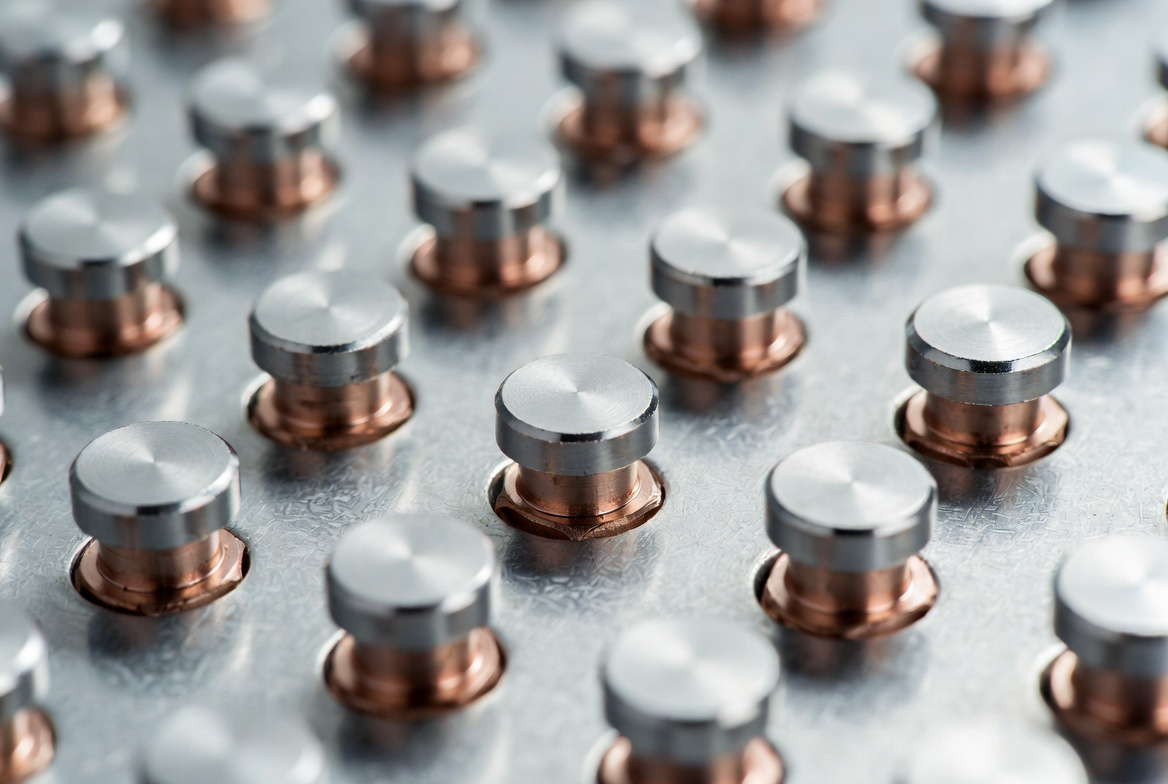
AgNi is still the most common silver electrical contact material for low to medium power stuff. Nickel content usually 10–30%, silver makes up the rest. It gives you low contact resistance (often under 2 milliohms), decent resistance to material transfer in DC, and it’s super easy to rivet or weld onto copper bases. We ship millions of AgNi rivets every month for household appliance switches, automotive auxiliary relays, and signal relays.
What people like about AgNi silver electrical contacts: cheap, reliable, processes well on high-speed lines. What people hate: it’s not great under heavy inductive loads or high inrush currents – it can pit and erode faster than some other alloys. But for most everyday switching under 30 A, it’s hard to beat.

2. AgSnO2 (Silver Tin Oxide) – The New King for High-Power & Green Applications
AgSnO2 has basically taken over as the go-to silver electrical contact material for anything serious in 2025. Tin oxide particles (usually 8–15%) dispersed in silver give incredible arc erosion resistance and anti-welding performance. It’s the direct replacement for AgCdO now that cadmium is basically banned everywhere that matters.
We make AgSnO2 silver electrical contacts with In2O3 or Bi2O3 doping for even better temperature rise control – these are flying out the door for EV charging piles, solar string inverters, and industrial contactors. Life expectancy under 60A inductive load can hit 300,000–1,000,000 cycles depending on the exact setup. Yes, it costs more than AgNi, but the extra lifespan usually pays for itself in warranty and downtime savings.

3. Silver Tungsten Contacts (AgW) – For When Things Get Really Serious
When you need to handle hundreds or thousands of amps – think high-voltage breakers or heavy-duty motor controls – silver tungsten contacts (AgW50 to AgW70) are still the go-to. Tungsten gives insane hardness and arc resistance; silver gives you the conductivity you need to not overheat. We make both solid AgW and bimetal versions with copper backing.
Downside? They have higher contact resistance than pure silver alloys (10–20 mΩ typical), so they’re not for low-power stuff. But in applications where arc erosion would destroy other materials, silver tungsten contacts just keep going. We’ve seen them survive 10,000+ operations under 500A short-circuit conditions.
4. Silver Graphite Contacts (AgC) – The DC Specialist
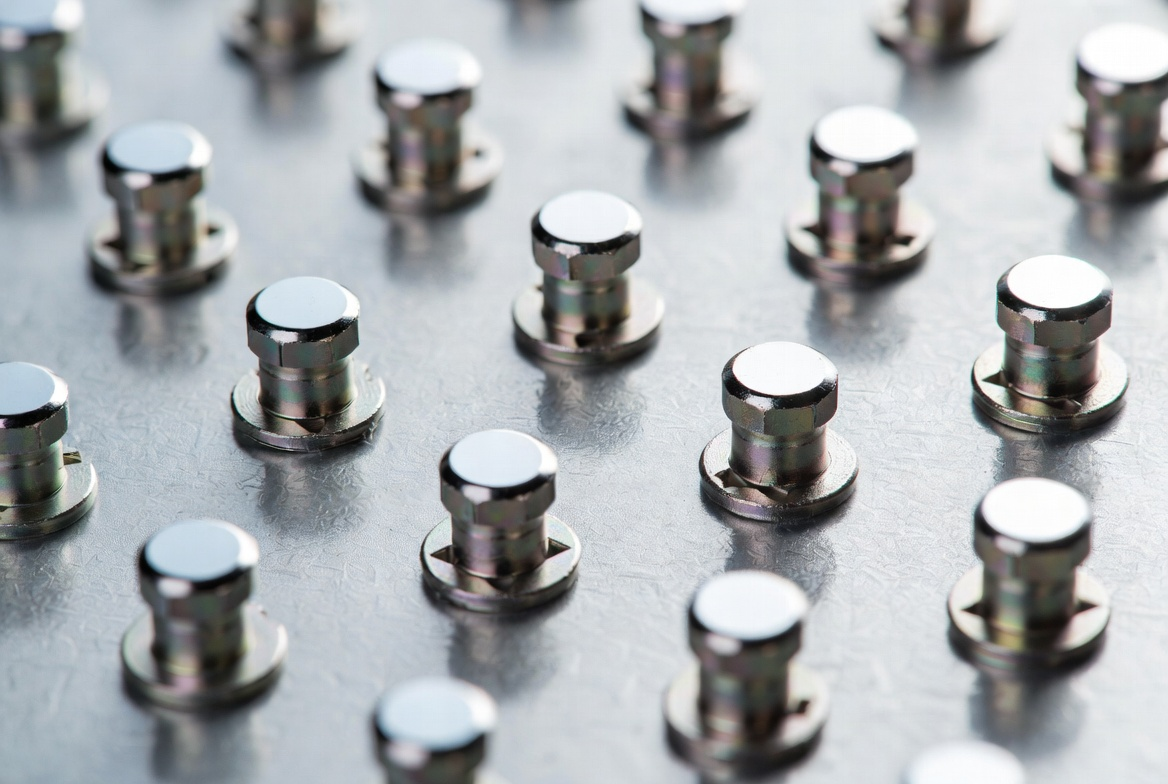
If you’re switching DC loads – especially EV pre-charge relays or battery disconnect switches – silver graphite contacts (AgC5–10) are often the only thing that works reliably. The graphite forms a lubricating layer during arcing, almost completely preventing material transfer and welding. We’ve tested our AgC5 tri-metal design to over 200,000 cycles at 60VDC/50A with zero welding incidents.
Quick Comparison Table: Silver Electrical Contacts Materials in 2025
| Material | Best For | Contact Resistance | Arc Resistance | Anti-Welding | Typical Life Cycles | RoHS |
|---|---|---|---|---|---|---|
| AgNi | Low-medium power relays | ≤2 mΩ | Moderate | Good | 100K–500K | Yes |
| AgSnO2 | EV chargers, solar, industrial | ≤5 mΩ | Excellent | Excellent | 200K–1M | Yes |
| AgCdO15/Cu | Legacy high-power AC | ≤3 mΩ | Good | Excellent | 100K–500K | No |
| Silver Tungsten (AgW) | High-voltage breakers | 10–20 mΩ | Excellent | Good | 10K–100K | Yes |
| Silver Graphite (AgC) | DC anti-welding | ≤8 mΩ | Good | Excellent | 150K–500K | Yes |
Full product specs and custom options: Chende Silver Electrical Contacts
Real-World Applications Where Silver Electrical Contacts Shine
Silver electrical contacts show up everywhere you need reliable switching:
- Automotive relays – especially auxiliary and power relays in EVs
- EV charging piles – high-current DC contactors
- Solar inverters & combiner boxes – DC arc handling
- Industrial contactors – AC-3/AC-4 duty cycles
- Circuit breakers – high momentary current withstand
- Home appliances – cost-effective low-power switching
We’ve shipped millions of silver-based electrical contacts for all these uses. For automotive-specific solutions, check our applications guide.
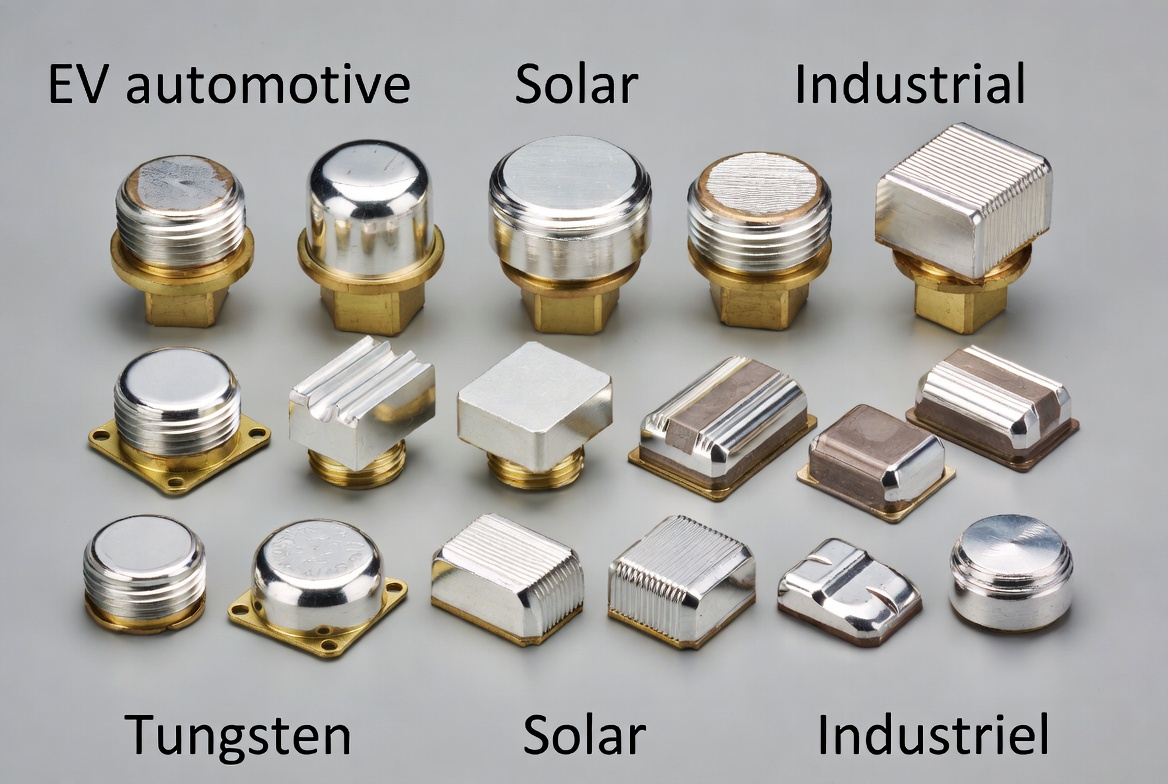
How We Make High-Quality Silver Electrical Contacts
Our process starts with powder metallurgy to get uniform alloy distribution, then pressing, sintering, riveting, and final plating if needed. Every batch of silver electrical contacts gets 100% inspection for resistance, hardness, and visual defects. We follow UL 508 and IEC 60947 standards closely.
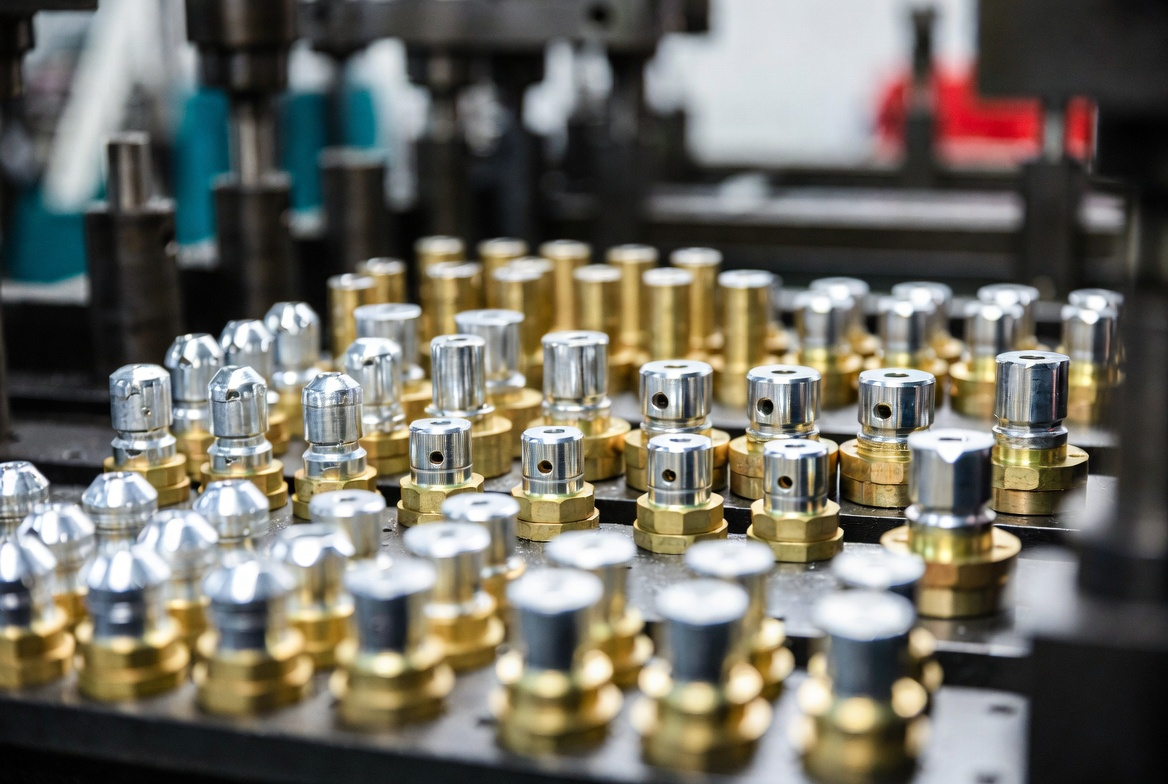
Why Chende? Real Reasons Buyers Stick With Us
I’ve talked to hundreds of buyers over the years. The ones that stay with us usually say the same things:
- We actually reply fast – usually within 2 hours
- Samples arrive in 3 days, not 3 weeks
- Quality stays consistent even on big orders
- We can tweak alloy ratios and tooling to solve specific problems
- We don’t disappear when something goes wrong
If that sounds like what you need, hit us up. We’re a real factory, not a trader.
Related Reading from Our Own Experience
- Silver Contact Materials Ultimate Guide 2025
- Silver Contact Applications in Different Industries
- Silver Contact Manufacturer China 2025 Guide
- All Electric Silver Contact Products
Authority Sources We Actually Use
- World Silver Survey 2025
- IEC 60947 Low-Voltage Switchgear Standards
- UL 508 Industrial Control Equipment
- TE Connectivity Relay Design Resources
- Schneider Electric Contactor Technical Specs
Ready to Get Real Silver Electrical Contacts That Work?
MOQ 10K | Same-Day Quote | Free Samples Worldwide